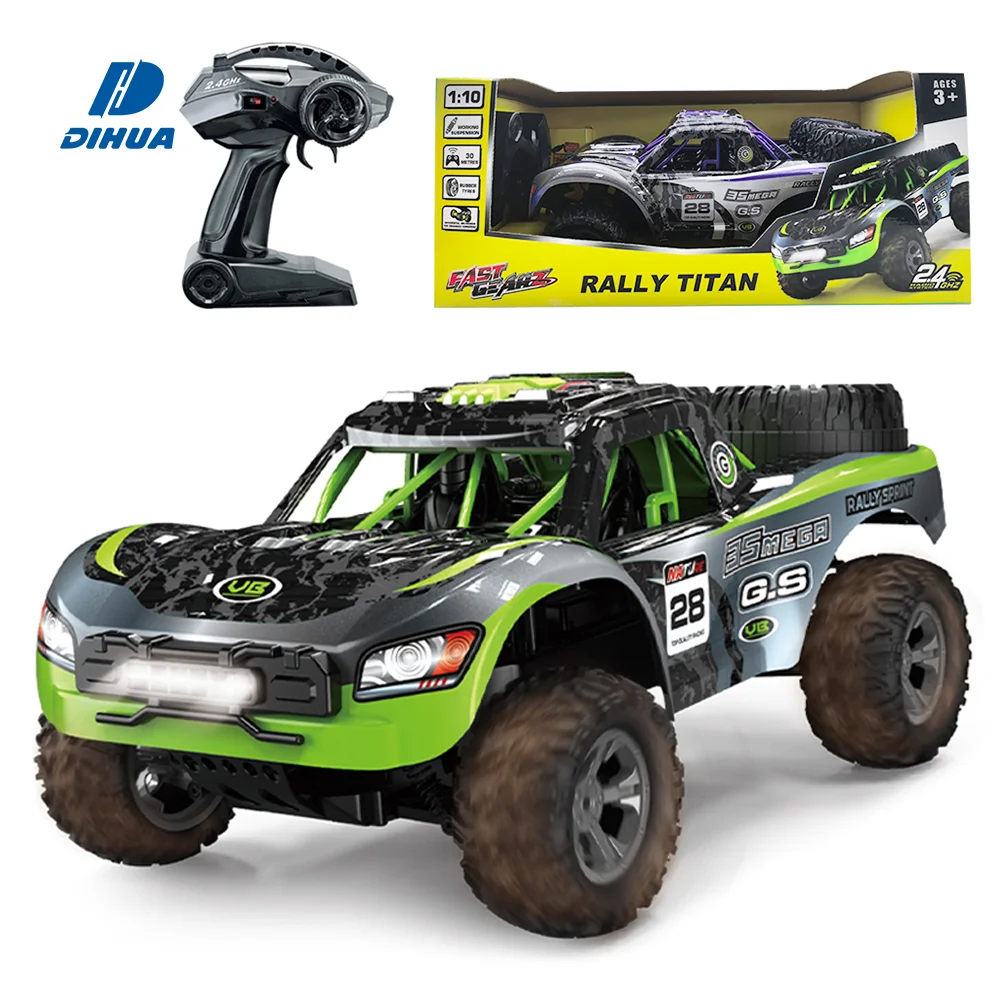
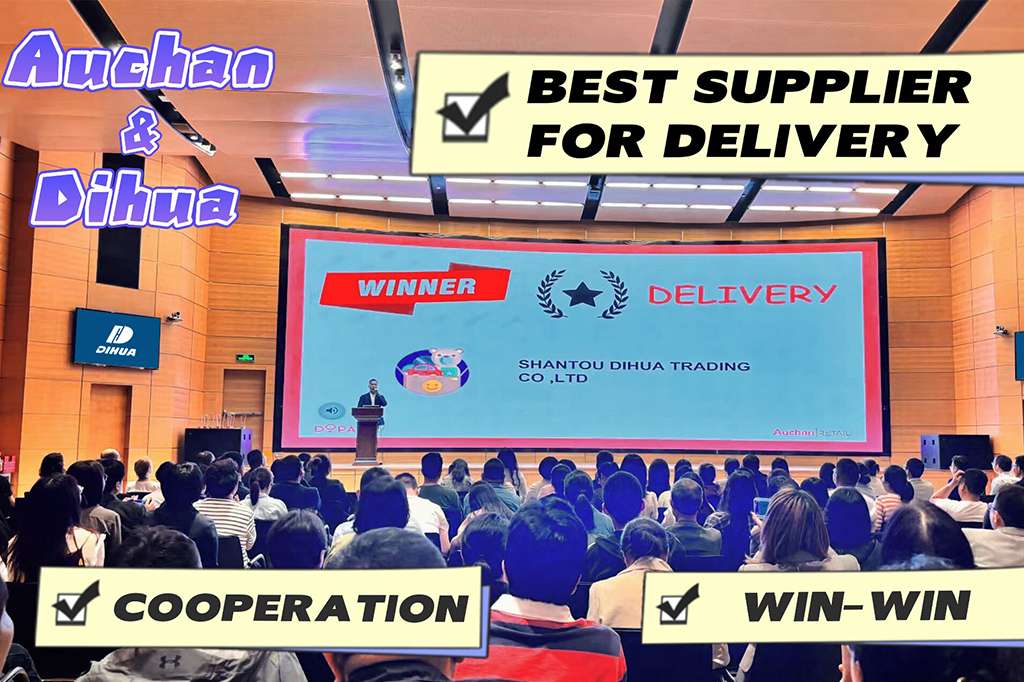
After the Canton Fair, importers, wholesalers, and retail buying teams typically collect contact details, product catalogs, and initial quotations from multiple RC toy suppliers. Different exhibitors may offer similar vehicle models or functional configurations, but their sourcing terms, production capabilities, and delivery arrangements can vary.
Price is often the first factor buyers compare, but it is not enough to determine whether a supplier is suitable for long-term cooperation. Sourcing risks may include production schedules that cannot be met, production units that differ from the approved sample, incomplete compliance documentation for the target market, or unstable supply of key components.
This article provides a three-step post-fair supplier screening checklist to help buyers move from initial supplier screening and quotation comparison to comprehensive supplier evaluation, and ultimately identify suitable RC toy sourcing partners.
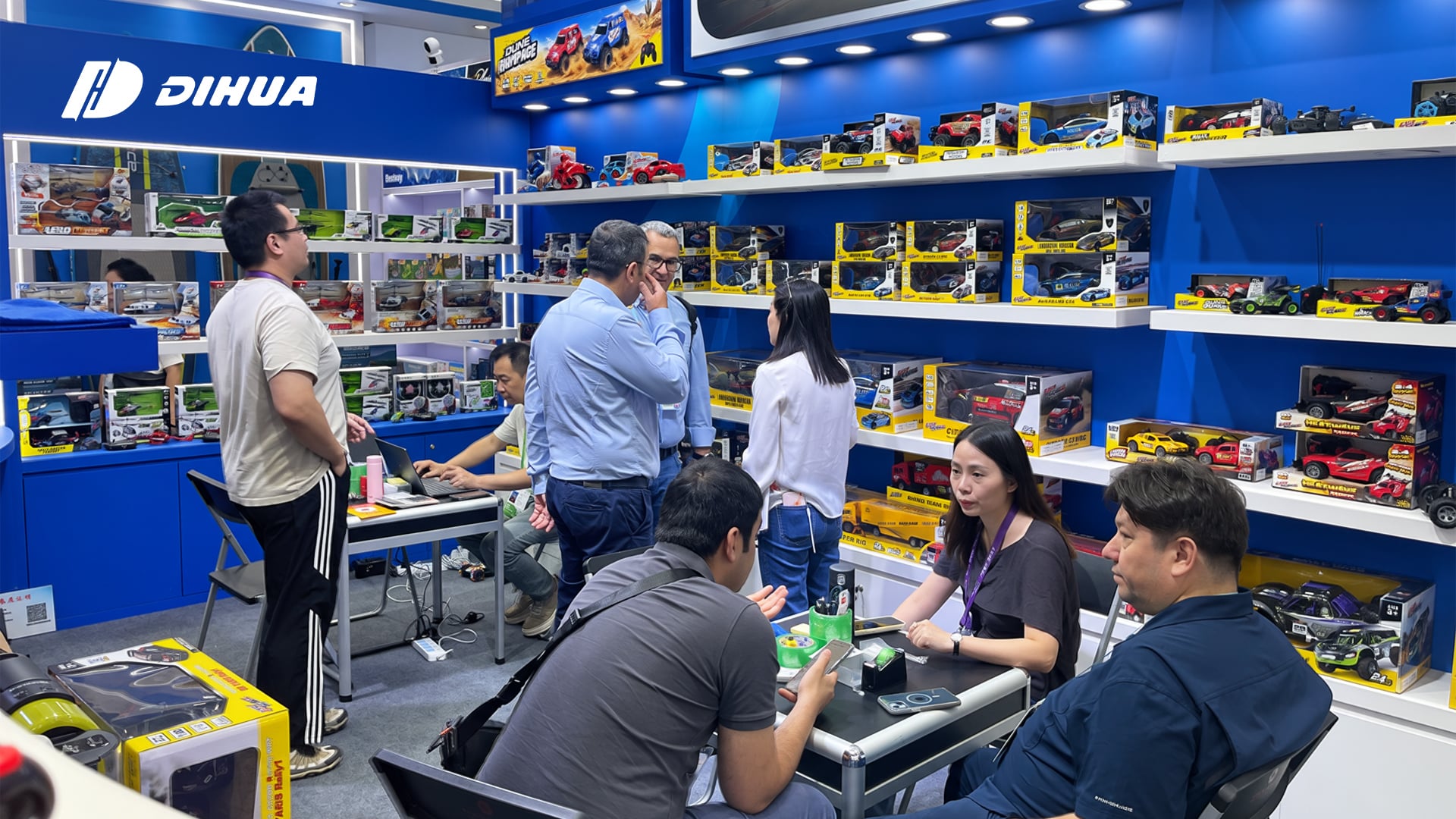
During the Canton Fair, buyers typically collect supplier information through business cards, product catalogs, booth photos, emails, and instant messaging. Because this information is often spread across different channels, it can be difficult after the fair to match contacts with specific products, SKUs, and quotations, increasing the time and effort required for follow-up.
A practical approach is to consolidate the information into a Supplier Follow-up Tracker. This creates a clear link between each supplier and the products discussed, while recording company background, products of interest, initial sourcing terms, and next actions for centralized follow-up and supplier management.
| Supplier | Type / Contact / Booth | Products Discussed | Initial Quotation / MOQ | Sample / Lead Time | Follow-up Status | Next Action |
| A | Manufacturer / A / XX | RC off-road vehicle | Quoted / To confirm | Available / To confirm | Priority Follow-up | Send RFQ |
| B | Trading Company / B / XX | Licensed RC vehicle | To confirm | To confirm | Pending Information | Verify actual manufacturer |
| C | Sourcing Service Provider / C / XX | Stunt RC vehicle | Quoted / To confirm | Available / To confirm | Not Prioritized | Keep on file |
Based on product fit with sourcing requirements and the completeness of supplier information, buyers can classify potential suppliers into three categories:
· Priority Follow-up: The products and business focus align with the sourcing requirements, providing a basis for further quotation or sample evaluation.
· Pending Information: Company background, product information, or sourcing terms are not yet clear and require further verification.
· Not Prioritized: The current product positioning or sourcing terms do not match the purchasing plan, so no further follow-up resources are allocated at this stage.
This process helps buyers prioritize suppliers and reduce unnecessary follow-up. The initial screening creates a supplier shortlist, not a final selection. Next, send a standardized RFQ to compare product specifications, quotations, and sourcing terms across shortlisted suppliers.
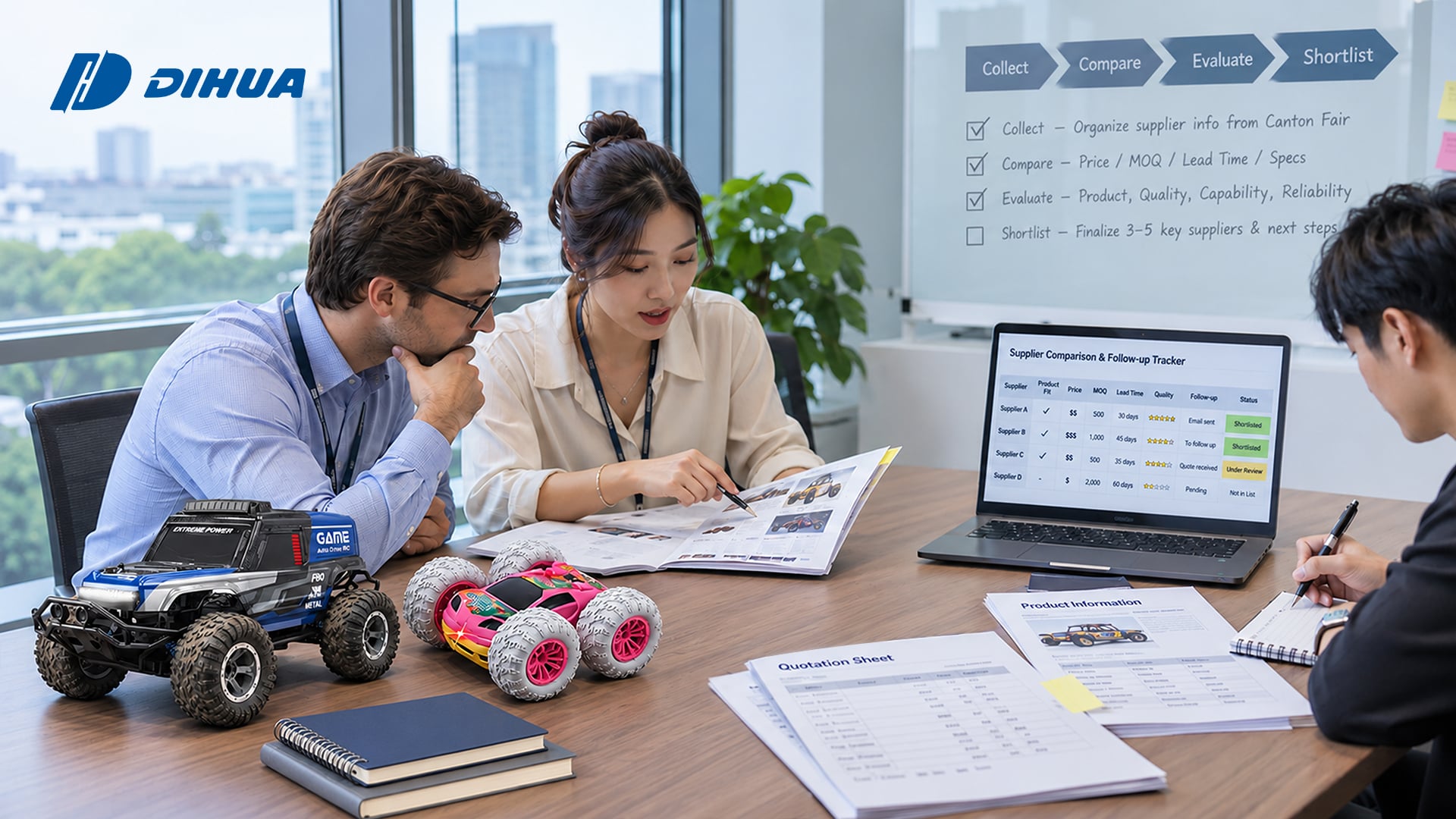
After the initial screening, buyers can send a formal Request for Quotation (RFQ) to shortlisted suppliers. However, quotations collected at the fair may be based on different product specifications, order quantities, and delivery terms, making direct price comparisons difficult. For example, differences in scale, functions, batteries, accessories, and packaging can affect the actual sourcing cost.
A standardized RFQ provides a consistent basis for comparing supplier offers. To ensure comparable quotations, standardize the requirements across the following five areas before sending the RFQ:
① Product Specifications and Functional Configuration
Specify the product model, dimensions, scale, remote control system and frequency, drive system, steering functions, and other required features.
② Battery, Charging Method, and Accessories
Confirm battery type, specifications, quantity, charging method, remote control batteries, charger, and other included accessories.
③ Packaging and Customization Requirements
Specify the retail packaging format and dimensions, along with requirements for logos, colors, packaging design, and other customization. Also confirm master carton dimensions, units per carton, gross weight, and net weight for logistics planning.
④ Order Quantity and Commercial Terms
Specify the estimated quantity per SKU, MOQ, mixed-SKU order requirements, unit price, volume pricing, trade terms such as EXW or FOB, delivery location or port of loading, payment terms, and quotation validity.
⑤ Samples and Production Lead Time
Confirm sample availability, sample cost and development time, required functional testing, production lead time, and Ready Date. For customized projects, also confirm the timeline from sample approval to mass production.
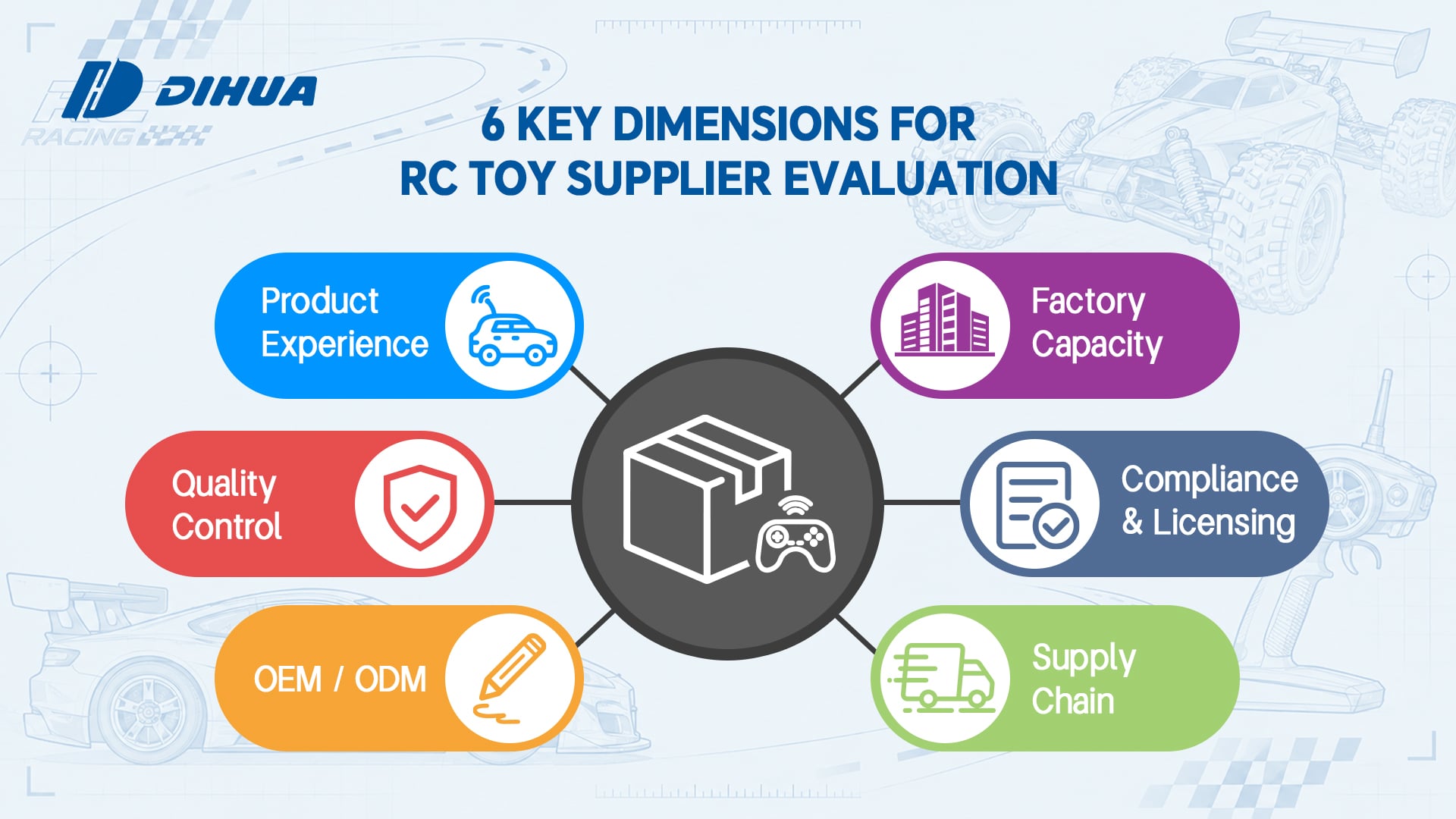
① RC Product Experience and Technical Capability
Assess whether the supplier has relevant experience developing and manufacturing the target RC categories and sufficient knowledge of key technologies.
· Product experience: Experience with RC cars, off-road vehicles, stunt cars, and related categories.
· Technical capability: Expertise in motors, remote control systems, batteries, drive systems, and related components.
· Product development: Ability to conduct functional testing, troubleshoot product issues, and optimize product performance.
② Factory Capability and Production Capacity
Assess whether the supplier has sufficient production resources to meet the required order volume and delivery schedule.
· Manufacturing setup: Own production facilities or stable, controllable manufacturing partners.
· Production capacity: Production lines, workforce, equipment, and actual capacity aligned with order requirements.
· Production management: Established production management processes and the ability to handle orders consistently.
③ Product Quality and Quality Control
Assess whether the supplier can maintain consistent product quality and ensure mass production meets the approved sample standard.
· Quality control: Inspection procedures covering incoming materials, production processes, and finished goods.
· Product testing: Testing of RC performance, motors, batteries, structural components, and durability.
· Quality consistency: Batch traceability, issue handling, and corrective action processes.
④ Compliance and Product Licensing
Verify whether the products meet target-market requirements and whether the supplier has the necessary authorization for licensed products.
· Product compliance: Required toy safety test reports, certifications, and other market-specific documentation.
· Electronic compliance: Requirements related to wireless RC systems, battery safety, and transportation.
· Brand licensing: For IP-based products, verify licensing rights, authorized sales territories, and license validity.
⑤ OEM/ODM and Customization Capability
Assess whether the supplier can support private-label requirements and differentiated product development.
· Customization: Support for logos, colors, packaging, and product configurations.
· R&D capability: Product design, structural development, functional modifications, and sample development.
· Commercial terms: Reasonable MOQ, development timelines, and tooling costs.
⑥ Supply Chain and Delivery Capability
Assess whether the supplier can maintain key component supply, meet delivery schedules, and support ongoing replenishment.
· Material management: Incoming inspection and supplier management for key components.
· Production and delivery: Multi-SKU coordination, order progress tracking, and on-time delivery management.
· Supply continuity: Stable replenishment channels and alternative sources for critical components.
After completing the six-dimensional assessment, buyers can classify suppliers as primary suppliers, backup suppliers, suppliers requiring further verification, or suppliers not selected, based on product fit, quotation terms, sample evaluation, and audit results.
Before placing the final order, buyers should also verify the product model, specifications, approved sample, quality acceptance criteria, packaging, payment terms, and delivery terms stated in the purchase order, and retain all documentation confirmed by both parties.
Through a six-dimensional supplier assessment, buyers can evaluate a supplier's RC product experience, production capabilities, quality management, and delivery performance. However, projects involving multiple RC categories, multiple SKUs, or cross-category sourcing often require more than a single factory. They may also involve coordinating different production resources, product development, and order management.
Since 2001, Dihua has been engaged in toy exports and operates as a one-stop toy sourcing and supply chain partner. In addition to RC toys, its product portfolio covers wooden toys, educational games, outdoor toys, seasonal products, and other categories. Supported by dedicated sourcing, product development, and quality management teams, as well as its own and partner manufacturing resources, Dihua can support supplier selection, product matching, OEM/ODM customization, quality management, and order coordination based on buyer requirements.
① Diverse RC Product Resources and Supplier Matching
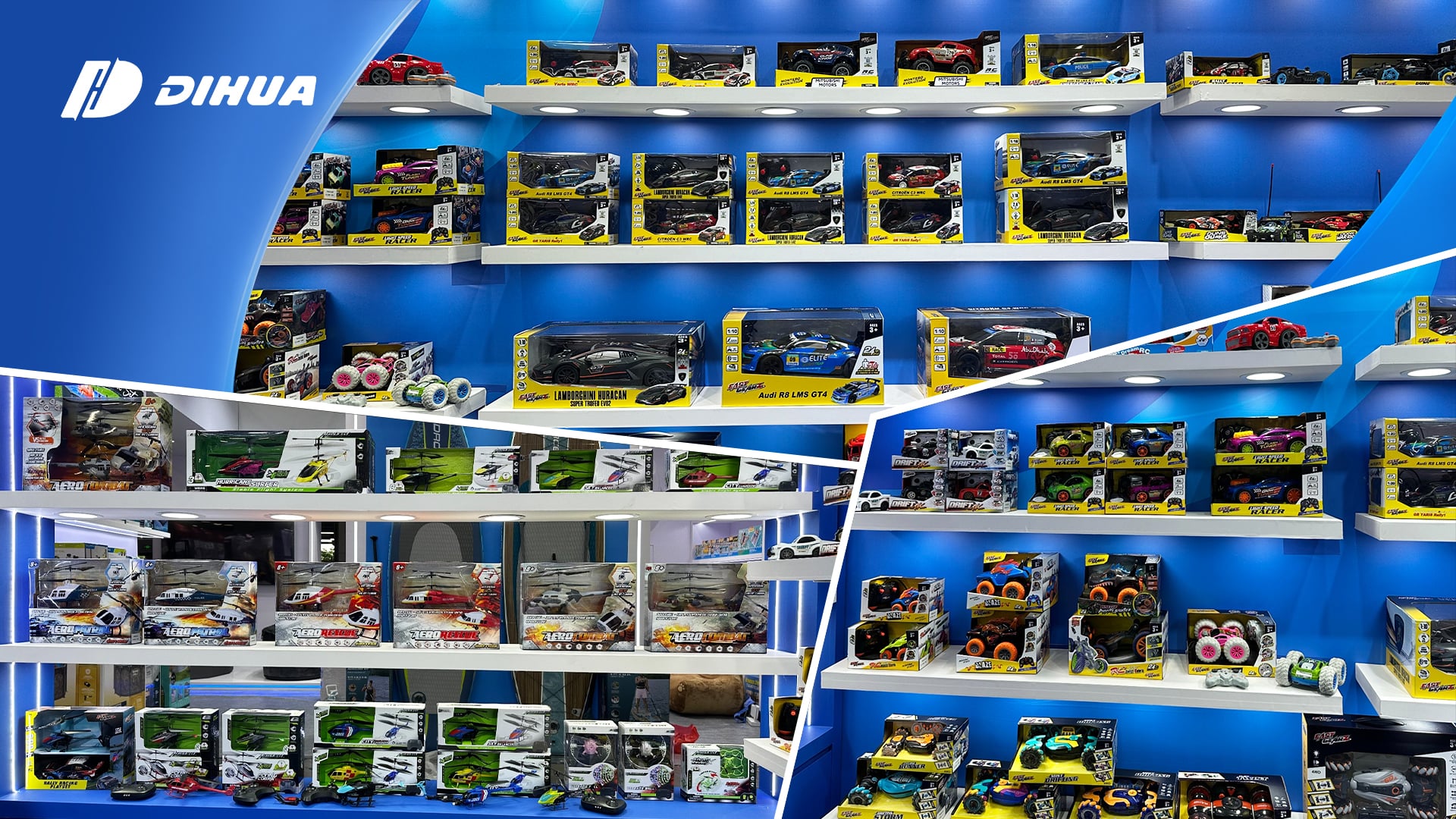
Dihua operates an approximately 6,000㎡ toy showroom with continuously updated samples and maintains a product database of 1,000,000+ SKUs across multiple toy categories. Its RC range includes officially licensed RC cars, Fast Gearz RC models, and other RC toys, with licensed models including the Toyota Yaris WRC, Citroën C3 WRC, and Mitsubishi Montero Evolution.
A 25-person sourcing research team uses sales rankings, best-selling products, and category developments to help buyers identify products and match manufacturing resources based on target markets, retail price points, functional requirements, and order volumes.
② Sourcing Coordination and Product Development Support
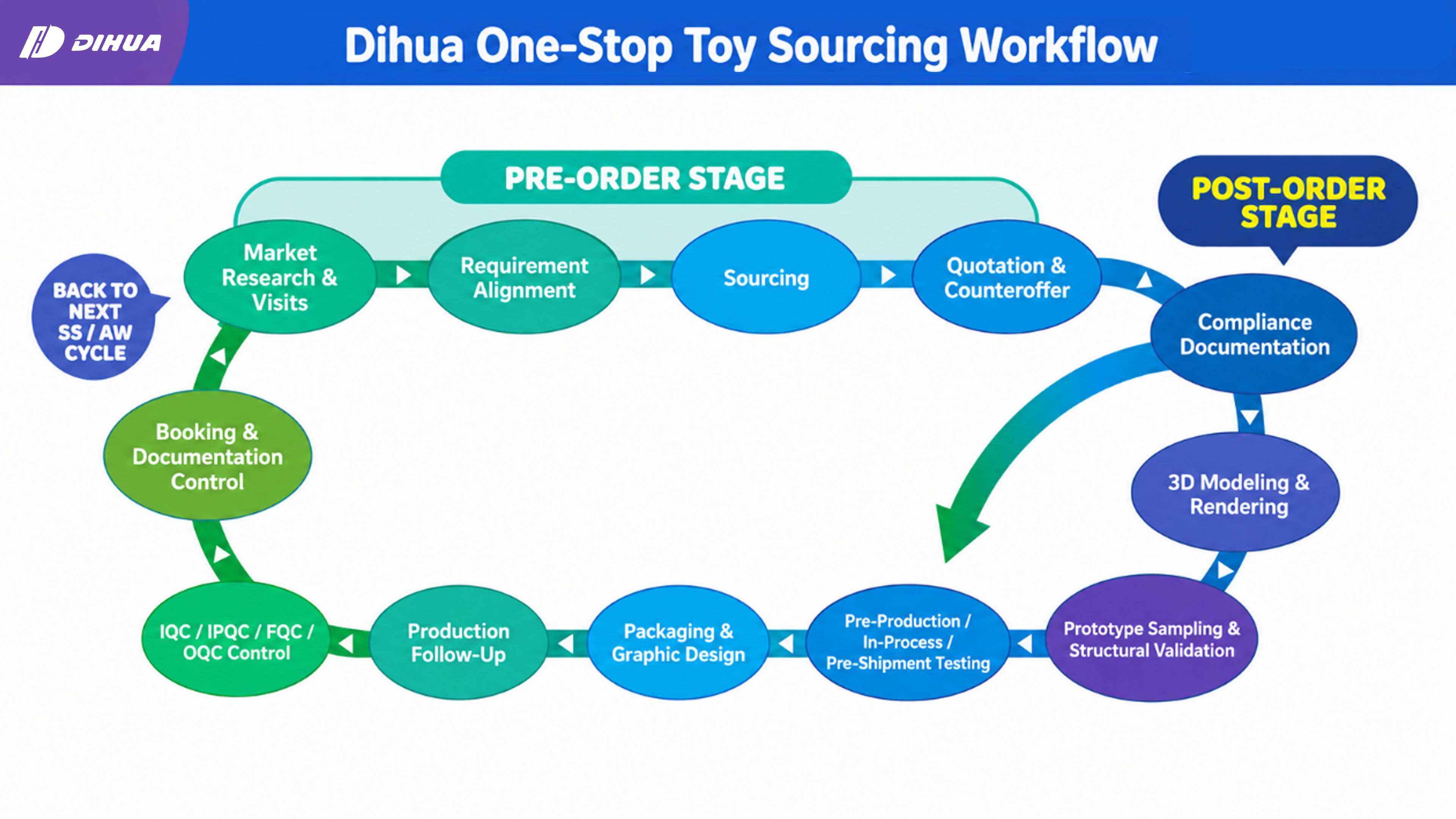
Once the product direction is confirmed, Dihua assists with product specifications, order quantities, quotations, MOQ, samples, and lead times, while coordinating OEM/ODM and packaging customization. Its 20-person product development team and 10-person design team provide 3D modeling, product rendering, prototyping, structural validation, and packaging design, enabling buyers to evaluate product solutions before mass production and reduce repeated revisions.
③ Quality Management and Order Fulfillment Support
During order execution, Dihua coordinates quality and delivery through its internal laboratory, QC team, and third-party testing resources:
· Testing and compliance: Supports pre-production, in-process, and pre-shipment testing, while coordinating with third-party testing organizations such as BV, TÜV, SGS, and ITS to confirm applicable target-market requirements.
· Production quality: Follows incoming material, in-process, finished-product, and pre-shipment inspections to verify that production units remain consistent with approved specifications and samples.
· Warehousing and logistics: With a 6,000㎡ quality inspection and consolidation center, 10,000㎡ warehouse capacity, and an export team, Dihua coordinates multi-SKU consolidation, booking, export documentation, and shipment arrangements.
For cross-category sourcing projects, Dihua can reduce the need for buyers to coordinate with multiple factories while managing sourcing schedules and order milestones across the project.
If you are planning your next RC toy purchase, share your product references, target market, required specifications, estimated order volume, and target delivery date with the Dihua team. Based on these requirements, Dihua can assess suitable product and manufacturing matches and provide initial product recommendations and sourcing options within 1–2 business days, helping move the project forward from quotation and sample evaluation to order execution.
Q1: Why can quotations for the same RC toy vary significantly?
Quotation differences may result from variations in battery and remote control configurations, packaging, certification and testing status, tooling, and quotation quantities. Before comparing prices, buyers can use a standardized RFQ to align product specifications, quantities, and trade terms, then compare unit prices and lead times on the same basis.
Q2: What should an RC toy RFQ include?
An RC toy RFQ should cover product specifications and functions, battery and accessory requirements, packaging and customization, order quantity and MOQ, pricing and commercial terms, sample requirements, and production lead time.
Q3: Can Dihua support multi-SKU RC toy sourcing and OEM/ODM projects?
Yes. Dihua provides officially licensed RC cars, Fast Gearz standard RC models, and other RC toy resources, and can match manufacturing resources based on the buyer's product positioning, target market, and order volume. For multi-SKU sourcing and OEM/ODM projects, Dihua can also coordinate product development, sample production, packaging design, and customization requirements.
 Hot News

Dihua specializes in sourcing,productdevelopment,production tracking,sales,and service.
Headquarters:
No.1 Leshan Road, Longhu District, Shantou, Guangdong, China
Hong Kong office:
Unit 2401,24/F, Million Fortune Industrial Centre, No.34-36 ChaiWan Kok Street, Tsuen Wan, NT, Hong Kong
Copyright © Shantou Dihua Trading Co.,Ltd. All Rights Reserved Privacy Policy

 EN
 FR
 JA
 RU
 ES