In 2026, growth in the licensed toy market and continued interest in transportation-themed toys are creating opportunities for licensed remote control (RC) cars.
According to Circana's August 2026 report, U.S. toy sales increased by 17% in the first half of 2026, while licensed toy sales grew by 24%, accounting for 39% of total toy sales. These figures indicate that licensed toys continue to perform strongly in the overall market. Transportation-themed toys are also attracting considerable attention. In an analysis published by Toy World, Circana reported that transportation-themed toys accounted for 11% of UK toy sales in the first four months of 2026, representing 15% year-over-year growth. Toys associated with Ferrari and Ford recorded notable sales growth, while automotive brands such as Bugatti and Porsche continued to attract market interest. These trends highlight the appeal of automotive brands in the toy market and provide a useful reference for buyers exploring licensed RC cars.
For toy buyers, combining automotive brands, motorsport properties, and entertainment IPs with RC functionality can help create more distinctive SKUs, expand gift-oriented product ranges, and build cohesive product assortments. However, the commercial value of licensing ultimately depends on product development, cost management, quality control, and timely market launches. Choosing a supplier capable of turning licensed vehicle designs into products that meet market requirements is therefore essential to successful sourcing.
Licensed RC cars combine the brand recognition of automotive, motorsport, and entertainment IPs with interactive RC functionality, creating opportunities for differentiated product positioning. For toy retailers, wholesalers, and importers, their value extends beyond SKU recognition to gift-oriented product ranges, broader price positioning, and long-term assortment planning.
Standard RC cars often compete on size, lighting effects, speed, or stunt features. As a result, products within the same price range may have similar designs and selling points. Licensed RC cars offer additional differentiation through recognizable automotive brands, model names, and distinctive vehicle designs.
For example, licensed supercar models can enhance gift appeal, while licensed racing cars can draw on motorsport culture and collector interest, offering buyers more differentiated product options across retail channels.
For e-commerce retailers, brand and model names provide more specific product search terms. For brick-and-mortar retailers, recognizable vehicle designs and branded packaging can improve shelf visibility and reduce reliance on price competition alone.
Licensed RC cars combine interactive play with the established appeal of well-known IPs. For retailers and wholesalers, existing brand awareness and fan communities can help reach a broader customer base, including children, automotive enthusiasts, and IP fans.
By considering model accuracy, functional features, and packaging design, buyers can develop gift-oriented SKUs across different price points. The added brand value can also support mid-to-premium product positioning.
Toy designs, brand logos, and character appearances may be protected by intellectual property (IP) rights. Products that use protected IP elements without proper authorization can expose retailers and importers to infringement claims, product delistings, and inventory losses.
Officially licensed RC cars provide the right to use specified brand logos, vehicle designs, or character elements within the agreed licensing scope. This establishes a clearer legal basis for the commercial use of those IP elements and can help reduce intellectual property disputes and disruptions to retail sales, supporting long-term product sales.
Automotive brands offer a range of vehicle models and racing series, while entertainment IPs provide characters, vehicles, and themed settings. These assets create opportunities to develop broader licensed RC product ranges.
For example, Ferrari offers opportunities to develop RC models based on different sports cars and racing vehicles, while Mario Kart provides recognizable characters such as Mario and Luigi for themed RC product lines.
For retailers and wholesalers, established IPs can support product assortments featuring different models, scales, and functions under a consistent brand or theme. This enables buyers to introduce new SKUs, expand price ranges, coordinate shelf displays, and plan ongoing replenishment while reducing the effort required to build market awareness for each new product.
Overall, licensed RC cars offer opportunities for differentiated product selection and long-term assortment planning. However, their commercial value ultimately depends on licensing costs, product quality, and whether the supply chain can meet buyers' operational requirements.

Compared with standard RC cars, licensed products involve additional considerations, including IP licensing restrictions, brand approvals, and development costs. If not properly managed, these requirements can lead to product delistings, reduced profit margins, and delivery delays.
Licensed RC cars may be subject to restrictions on product categories, sales territories, and licensing periods.
If the models being sourced fall outside the authorized scope, buyers may face IP infringement claims, product delistings, and inventory losses. Inconsistencies between licensing permissions and the information displayed on product packaging or online listings may also cause retailer compliance issues or sales disputes.
Licensed RC cars may involve royalty fees, minimum guarantees, dedicated tooling costs, and brand approval expenses, which may be reflected in supplier quotations.
However, consumers may not be willing to pay a price premium proportional to these additional costs. If the retail price cannot adequately cover sourcing, channel, and after-sales costs, SKU profit margins may fall below expectations, weakening price competitiveness.
Buyers who require retailer-specific information printed on product packaging may need to obtain additional approval from the licensor.
Custom-printed packaging may also be subject to higher minimum print runs, typically 1,000–3,000 units or more, depending on the packaging supplier and specifications. This can increase upfront investment and inventory pressure.
Sample and packaging approval processes can take approximately 2–4 weeks. Without sufficient coordination between approvals, production, and logistics, delays may cause buyers to miss key promotional periods, such as Black Friday and the Christmas shopping season.
RC performance issues, such as shorter-than-expected control range, inconsistent steering response, or insufficient continuous operating time, can lead to returns and additional after-sales costs. Damage to wheels, drivetrain components, or other parts may create similar problems.
Variations between production batches, including paint color differences, incorrect logo placement, inconsistent assembly quality, or changes in functionality, may also affect customer reviews and retailers' willingness to reorder.
Therefore, buyers should evaluate more than the market appeal of licensed IPs. Licensing validity, sourcing costs, supplier development capabilities, mass production quality, and delivery arrangements are all important considerations when selecting a reliable licensed RC car supplier.

The commercial value of licensed RC cars depends on a supplier's ability to turn licensed IPs into products with consistent quality, viable profit margins, and reliable availability. Buyers can evaluate potential suppliers across four key areas: licensing and commercial viability, product development, quality management, and delivery support.
Holding a license for a particular brand does not necessarily mean a supplier is authorized to sell every model under that brand. Buyers should request relevant licensing documentation and verify that the license holder, authorized vehicle models, product categories, sales territories, validity period, and distribution rights align with their sourcing plans.
Buyers should also confirm that the use of brand logos and other licensed elements on packaging, product listings, and sales materials is permitted under the licensing agreement.
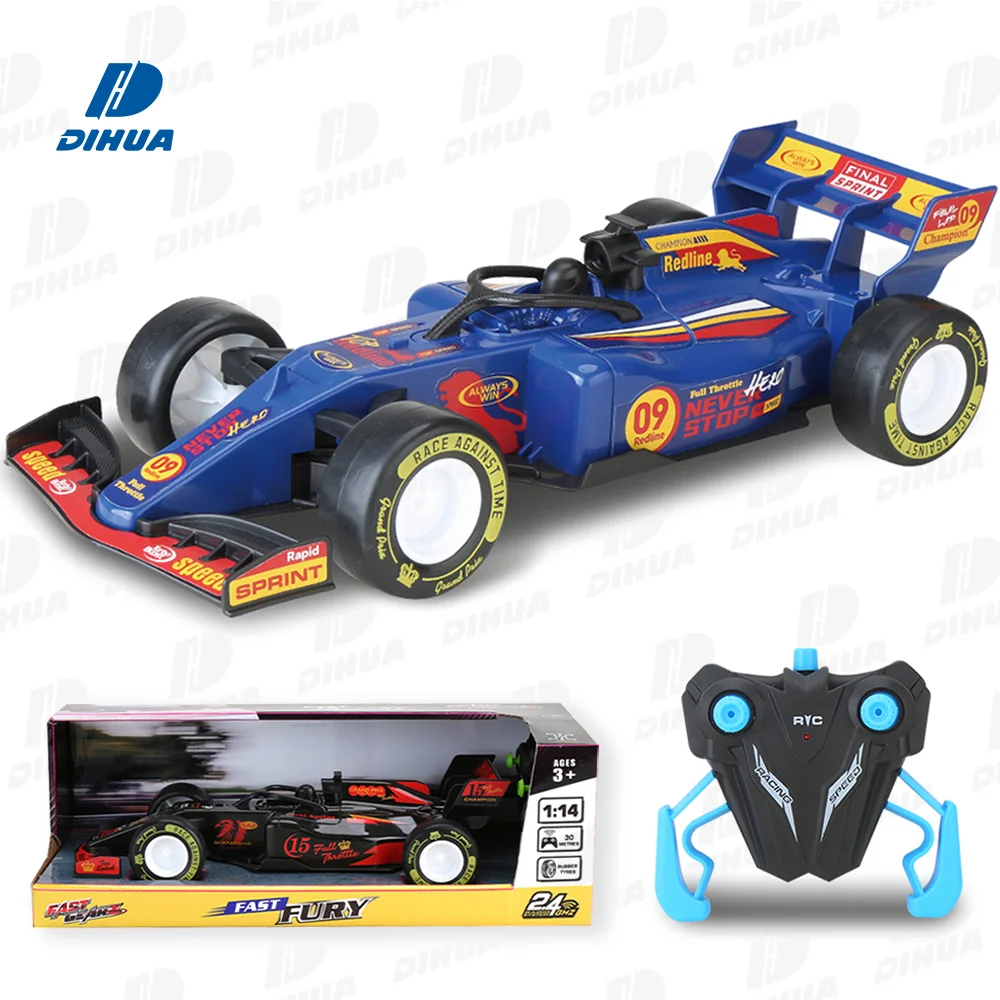
Buyers should review the supplier's portfolio of licensed vehicle models and IPs to determine whether it can support a product assortment covering multiple scales, such as 1:14 and 1:24, and different price points, as well as ongoing replenishment.
Key factors include the supplier's existing tooling resources, experience in 3D structural design and development, and ability to introduce new models. These capabilities can help buyers assess the supplier's suitability for long-term cooperation and custom product development.
Buyers should confirm whether quotations include licensing, tooling, product development, and packaging costs, as well as any additional charges or minimum order quantity (MOQ) requirements.
SKU gross margins should be evaluated against target retail prices, taking into account sourcing costs, freight, import-related expenses, channel commissions, and estimated after-sales costs. This helps determine whether the product meets the buyer's margin targets.
For existing products, buyers should compare samples with official brand design references and approved samples, checking vehicle proportions, racing liveries, logo placement, and character designs.
For OEM/ODM projects, buyers should review 3D models, prototypes, and previous brand approval records to assess whether the supplier can balance accurate IP representation with practical structural design.
Children's RC cars sold in the United States are generally subject to applicable CPSIA, ASTM F963, and FCC requirements. For the EU market, buyers should review applicable EN 71, EN IEC 62115, and Radio Equipment Directive (RED) requirements. RC cars containing lithium batteries also require appropriate battery safety and transport documentation, including UN 38.3 documentation where applicable. Buyers should verify that test reports match the actual product model, radio frequency, and battery configuration.
Performance testing should reflect the intended product category. Basic RC cars should be evaluated for control range, steering response, and continuous operation. Rally RC cars should be tested for driving stability, while off-road models should be assessed for ground clearance, terrain-handling capability, and drivetrain durability. Test results should meet the agreed product specifications.
An approved sample does not necessarily guarantee consistent mass production quality. For licensed RC cars, paint finishes, logo placement, assembly quality, and RC performance must remain consistent with approved specifications.
Buyers should review the supplier's incoming quality control (IQC), in-process quality control (IPQC), final quality control (FQC), and outgoing quality control (OQC) procedures.
They should also examine previous batch inspection reports, corrective action records, and traceability documentation. The key is to determine whether the supplier uses approved samples as production quality benchmarks and can identify and resolve recurring issues involving paint finishes, logo placement, assembly, and RC performance.
Licensed RC car launches may be planned around motorsport events, IP promotions, or seasonal gift-buying periods. Suppliers therefore need delivery capabilities that align with buyers' retail launch schedules.
Buyers should request a proposed timeline covering brand approvals, sample confirmation, compliance testing, production, and shipping, working backward from the target retail launch date. The schedule should also allow reasonable time for potential revisions.
In addition, buyers should confirm that product packaging, images, and demonstration videos meet the requirements of their retail channels and comply with applicable brand asset usage guidelines.
For licensed product lines intended for long-term sales, buyers should also assess MOQs, replenishment lead times, availability of key components, and the supplier's ability to manage updates to licensed product designs and packaging. These factors help determine whether the supplier can support ongoing sales and replenishment.
To address the licensing approvals, product development, quality control, and bulk order fulfillment requirements involved in sourcing licensed RC cars, Dihua draws on its experience with licensed projects, dedicated product development teams, and comprehensive quality management processes. These capabilities allow Dihua to support buyers throughout the sourcing process, from SKU evaluation and sample approval to mass production and delivery.
Dihua has extensive experience in officially licensed product development and co-branding approval processes. Products and packaging within its Fast Gearz range, including the Toyota Yaris WRC, Citroën C3 WRC, and Mitsubishi Montero Evolution rally and off-road RC models, have received the required approvals from the respective automotive brand licensors.
With a 20-member product development team and a 10-member design studio, Dihua provides 3D modeling, structural evaluation, prototype development, and comprehensive OEM/ODM support. Its familiarity with brand visual identity guidelines and approval procedures helps buyers evaluate design accuracy and structural feasibility, minimize repeated revisions, and develop additional SKUs within a licensed product range.
Dihua operates an in-house testing laboratory and works with third-party testing organizations, including ITS, SGS, BV, and TÜV. Based on the specific RC model and target market, Dihua can coordinate testing for applicable requirements such as EN 71, EN IEC 62115, the Radio Equipment Directive (RED), ASTM F963, and FCC regulations.
With an inspection and consolidation center covering over 6,000 square meters, Dihua applies incoming quality control (IQC), in-process quality control (IPQC), final quality control (FQC), and outgoing quality control (OQC) procedures. These processes support inspections of licensed vehicle designs, brand markings, RC functionality, and assembly quality, helping buyers manage compliance, batch consistency, and after-sales risks.

Licensed RC car launches often need to align with IP promotions and seasonal sales periods. Dihua provides production follow-up, quality inspections, freight booking, and export documentation coordination to help buyers manage production and logistics schedules.
With over 10,000 square meters of warehouse space and an annual export handling volume of more than 5,000 containers, Dihua supports bulk order consolidation and shipment coordination. These capabilities help buyers plan product launches, manage delivery schedules, and prepare for subsequent replenishment orders.
If you are looking to source licensed RC cars, expand your existing RC product line, or explore new OEM/ODM projects, contact the Dihua team to discuss your preferred vehicle models, licensing requirements, product development, testing and compliance needs, and bulk purchasing plans.
Dihua will exhibit at Phase 3 of the 140th Canton Fair, showcasing a range of toy products, including RC toys. Buyers are welcome to visit our booth to explore available product ranges and discuss licensed RC car sourcing and development opportunities with our team.
Phase 3 | October 31 – November 4, 2026
Booths 17.1B34–35, C10–11
We recommend contacting the Dihua team in advance with your target markets, preferred vehicle models, estimated order quantities, and planned launch dates. This will help us prepare relevant product information and arrange a more focused sourcing discussion.
Buyers should request valid licensing documentation covering the intended vehicle models and verify the license holder, authorized product categories, sales territories, validity period, and distribution rights.
For Dihua's Fast Gearz licensed RC car range, buyers can provide their target markets and preferred models when submitting an inquiry. The Dihua team can help confirm the applicable licensing scope and supply conditions.
Dihua offers two customization options, depending on the licensing arrangements and project requirements:
· Customization Based on Dihua's Existing Licenses: Buyers can select standard models from Dihua's licensed automotive and IP ranges or request modifications such as additional packaging labels, specific color schemes, or upgraded features. Dihua can coordinate the necessary approvals with the relevant licensors through its established approval channels.
· OEM/ODM Development Using Buyer-Held Licenses: For buyers who already hold licensing rights to specific brands or IPs, Dihua's 20-member product development team can provide OEM/ODM support, including 3D modeling, structural evaluation, prototyping, and mass production. The team can also coordinate with buyers throughout the licensor's brand visual identity and design approval process.
Buyers should plan their sourcing schedules according to the product development requirements, production lead times, and ocean freight arrangements.
· Existing Models with Standard Packaging: For Dihua's previously approved Fast Gearz models with standard licensed packaging, production lead times are typically 30–45 days. Allowing for ocean freight and customs clearance, buyers are advised to begin sourcing preparations approximately 3–4 months before their target launch date.
· Custom Development or Buyer-Specific Packaging (OEM/ODM): Projects involving 3D prototyping, packaging approval from licensors, mass production, ocean freight (approximately 30–40 days to the U.S. West Coast or Europe), and warehouse receiving may require longer lead times. Buyers are advised to initiate inquiries at least 5–6 months before their planned launch.
Once buyers provide their estimated order quantities, target delivery dates, and destination countries, the Dihua team will prepare a detailed brand approval schedule, production timeline, and logistics plan to help ensure products reach the market within the planned sales window.
 Hot News
Dihua specializes in sourcing,productdevelopment,production tracking,sales,and service.
Headquarters:
No.1 Leshan Road, Longhu District, Shantou, Guangdong, China
Hong Kong office:
Unit 2401,24/F, Million Fortune Industrial Centre, No.34-36 ChaiWan Kok Street, Tsuen Wan, NT, Hong Kong
Copyright © Shantou Dihua Trading Co.,Ltd. All Rights Reserved Privacy Policy

 EN
EN
 FR
FR
 JA
JA
 RU
RU
 ES
ES