In toy sourcing, compliance risks often do not appear only before shipment. They may be embedded from the very beginning of a project. If buyers do not clarify the target market, age grading, product functions, packaging warnings, testing requirements, and documentation standards at the RFQ stage, before sampling or mass production begins, issues such as retesting, packaging rework, delivery delays, delays in channel listing approval, or additional costs may occur later in the process.
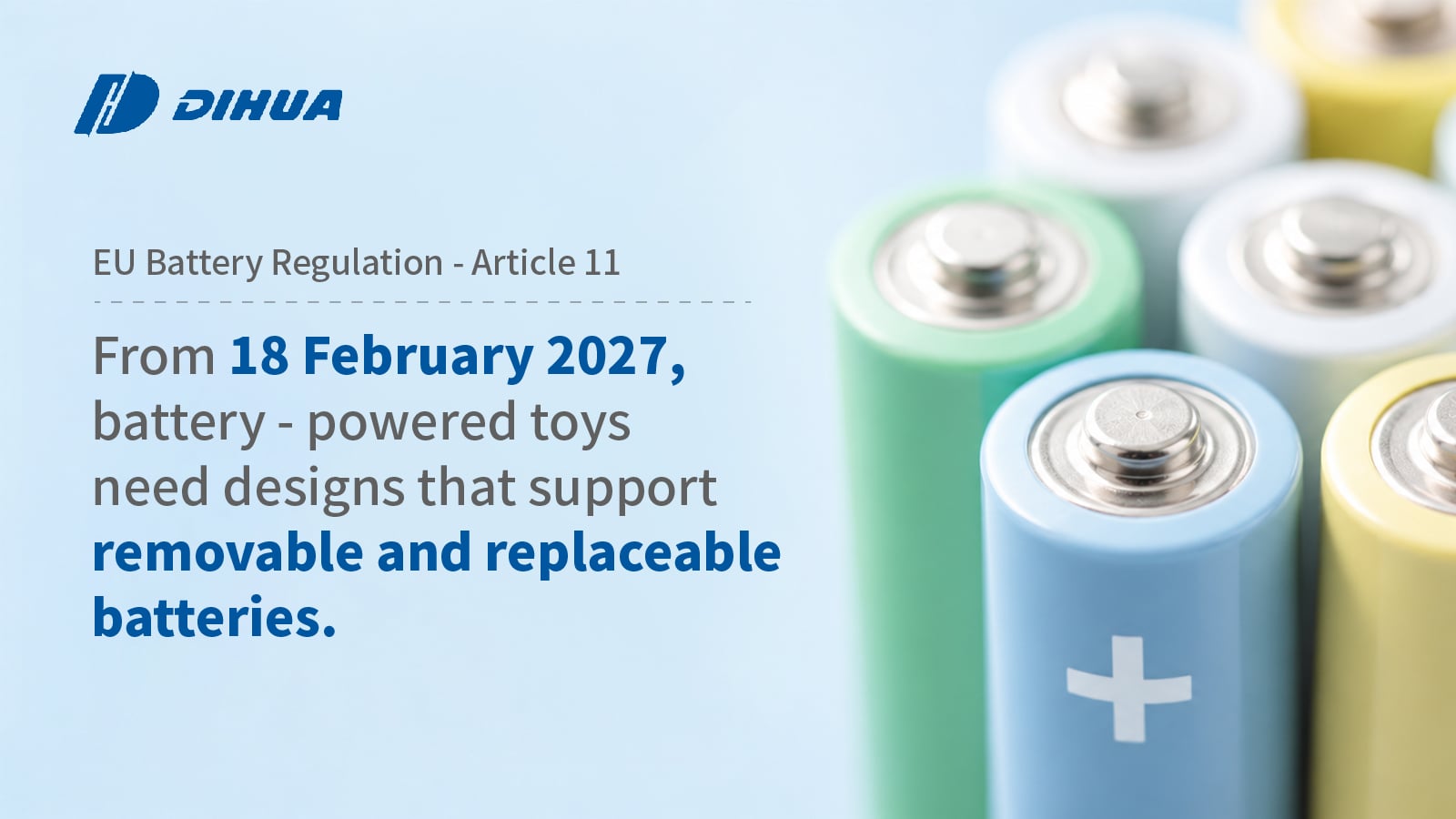
As global toy regulations, retailer policies, and platform requirements continue to evolve, early-stage compliance review is becoming increasingly important for toy importers, retailers, distributors, and brand buyers. For example, under the new EU Battery Regulation, requirements related to the removability and replaceability of portable batteries will apply from February 18, 2027. For battery-operated toys, buyers should confirm the battery structure, user instructions, packaging warnings, and target market compliance requirements before sourcing, sampling, or mass production.
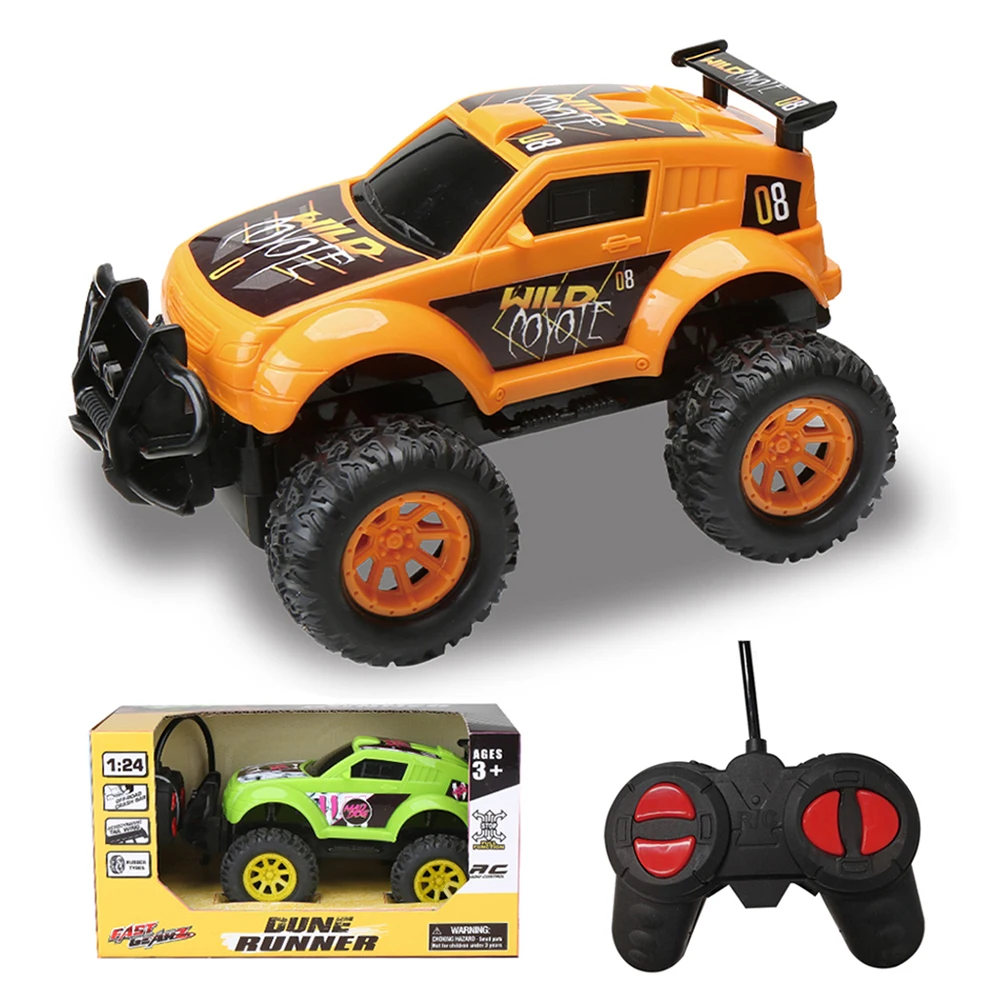
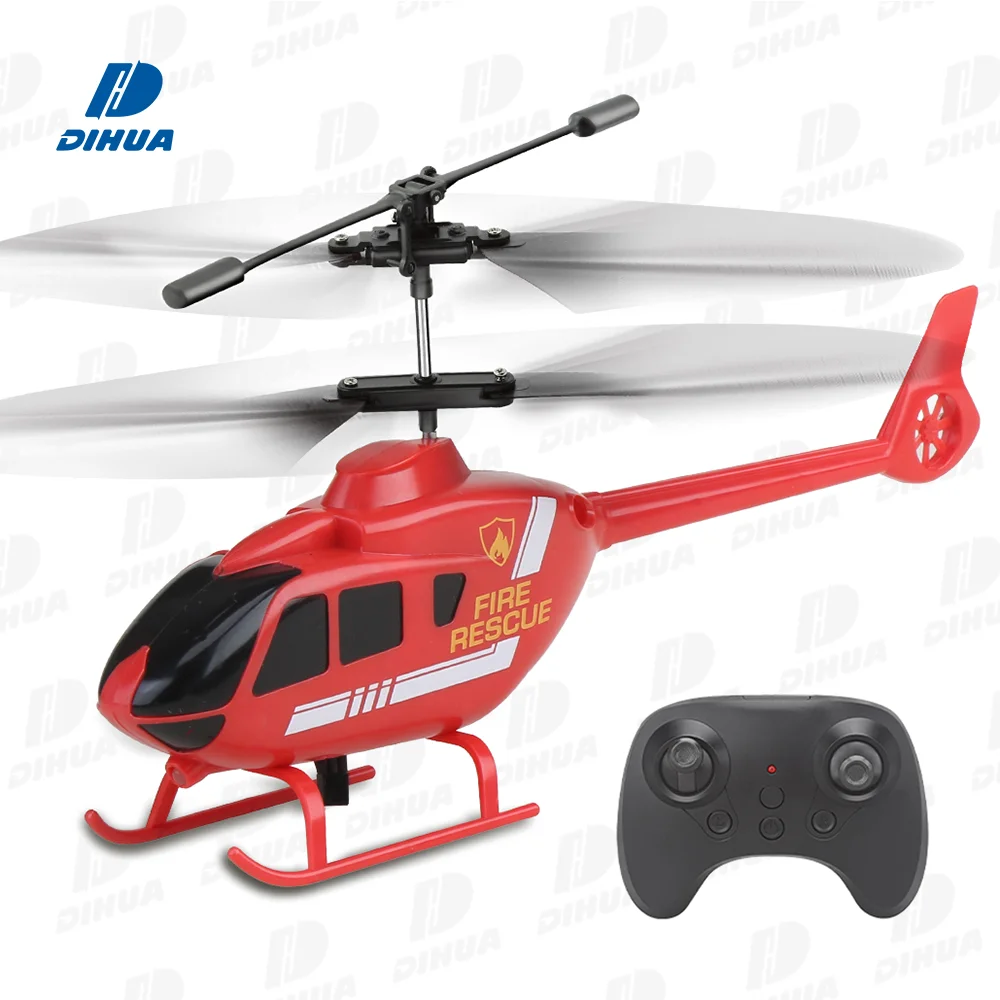
Whether buyers are sourcing RC toys, light and sound toys, bubble toys, outdoor toys, or OEM/ODM customized products, compliance should not be treated as a final check before shipment. It should be reviewed from the RFQ stage and managed throughout sampling, testing, production, and shipment preparation.
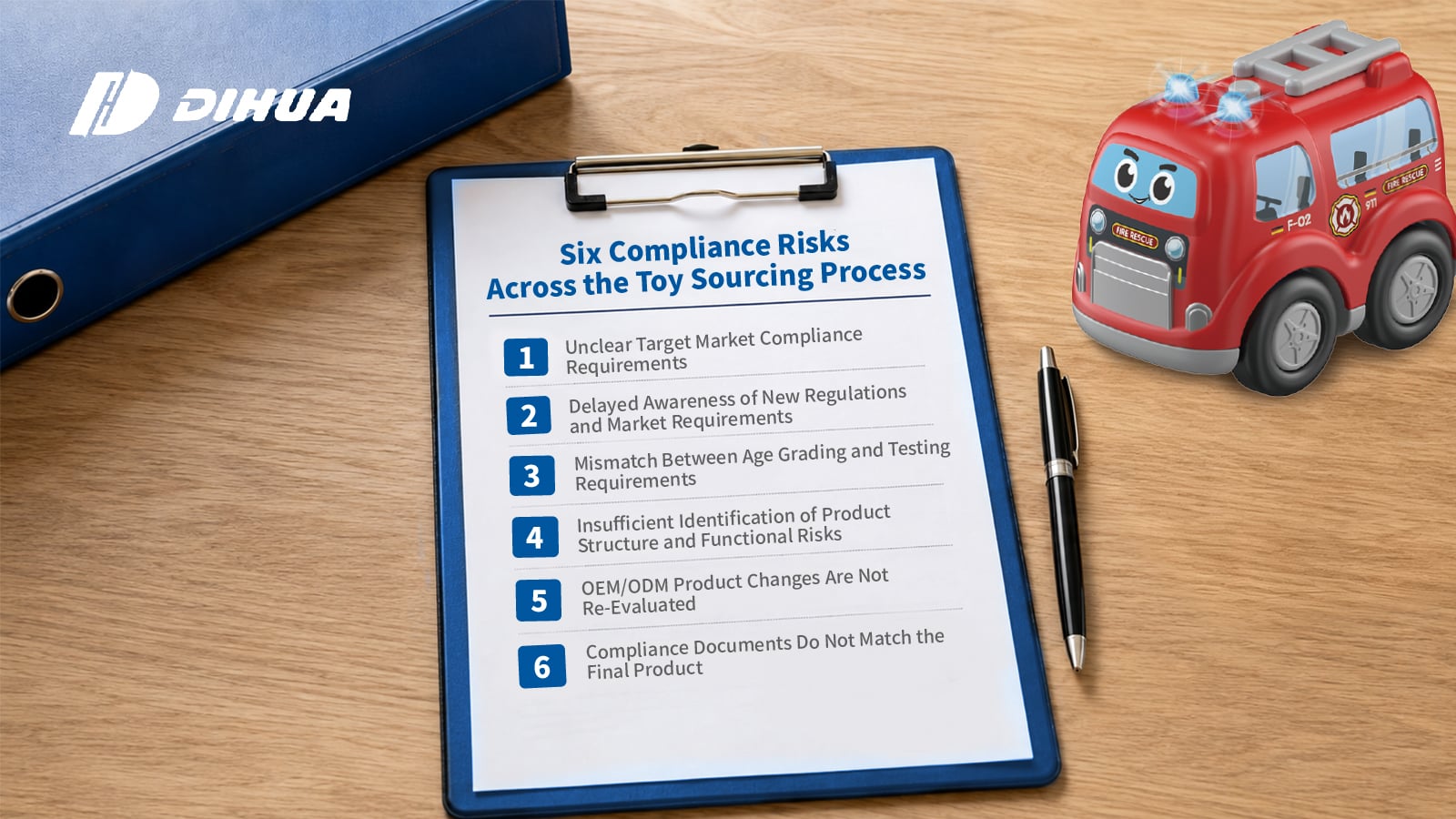
This article outlines six compliance risks that toy buyers should pay close attention to at an early stage, and explains how these risks can be controlled across different stages of the sourcing process.
Different markets, such as the United States, the European Union, the United Kingdom, and Australia, have significant differences in testing standards, labeling requirements, and technical documentation. If the target market is not clearly defined at the RFQ stage, suppliers may prepare quotations and testing plans based on the wrong regulatory requirements.
Potential impact: Retesting, packaging adjustments, and delays in customs clearance or market launch.
Toy regulations and retail platform requirements continue to evolve. If products are still developed based on outdated standards, buyers may only discover at a later stage that the product does not meet the latest requirements.
Potential impact: Increased product modification costs and delays to the planned launch window.
Age grading not only affects packaging labels, but also directly determines the required testing items and the scope of safety assessment. If age grading is confirmed too late, the product structure or packaging may need to be adjusted again.
Potential impact: Additional testing, sample modifications, or even product packaging redesign.
Batteries, magnets, electronic functions, detachable accessories, and special materials may all affect the testing scope. If these risks are not identified before testing, key testing items may be missed, or the test results may not apply to the final product.
Potential impact: Incomplete testing, invalid or inapplicable reports, or additional follow-up testing.
During product development, minor adjustments to materials, structure, functions, or packaging may affect the original test results. If these changes are not re-evaluated, the existing test report may become invalid.
Potential impact: Test results may no longer apply, requiring re-certification.
If the product, packaging, labels, or documents are inconsistent at the final shipment stage, this may affect customer audits, customs clearance, and channel listing approval.
Potential impact: Shipment delays, failed audits, or customs clearance issues.
For toy buyers, compliance review should run through every stage of the sourcing process, from RFQ and product development to testing, production, and final shipment preparation. Each stage has different control points. When these points are reviewed effectively at an early stage, buyers can reduce the likelihood of repeated testing, packaging modifications, delivery delays, and unexpected costs.
At the RFQ stage, buyers should first confirm the target market and applicable regulations. They should also define the recommended age grading and identify potential product function and safety risks. This helps reduce development and testing deviations caused by inconsistent standards.
Before OEM/ODM sampling, the product structure, functional design, battery solution, packaging, and user instructions should be assessed from a compliance perspective. This helps identify potential issues that may affect testing in advance and ensures that the design direction meets the requirements of the target market.
At the testing stage, buyers should clarify the applicable testing standards and certification requirements, while maintaining communication with internal laboratories and third-party testing organizations such as BV, TÜV, SGS, and ITS. This helps ensure that the testing plan matches the actual product version, functions, and packaging information.
During production, a quality control (QC) system should be used to ensure that the confirmed sample and mass-produced goods remain consistent in product structure, functions, materials, packaging, and labeling.
This helps prevent compliance results from becoming invalid due to production deviations.
Before shipment, buyers should recheck test reports, packaging labels, warning information, and shipping documents to ensure that all materials are fully consistent with the actual products. This helps reduce risks related to customs clearance review and channel listing approval.
For less-than-container-load (LCL) or full-container-load (FCL) shipments, buyers should pay special attention to consistency management across different products’ compliance status. If any single SKU has incomplete testing, missing documents, or non-compliant labeling, it may affect the loading and customs clearance progress of the entire shipment, resulting in overall transportation delays or even additional costs.

In the toy sourcing process, controlling compliance risks does not only depend on process design. It also depends on the supply chain’s responsiveness and coordination efficiency at the execution level. For projects involving multiple SKUs, multiple markets, and OEM/ODM development, whether the supply chain can provide consistent information support at key stages will directly affect the stability of compliance results.
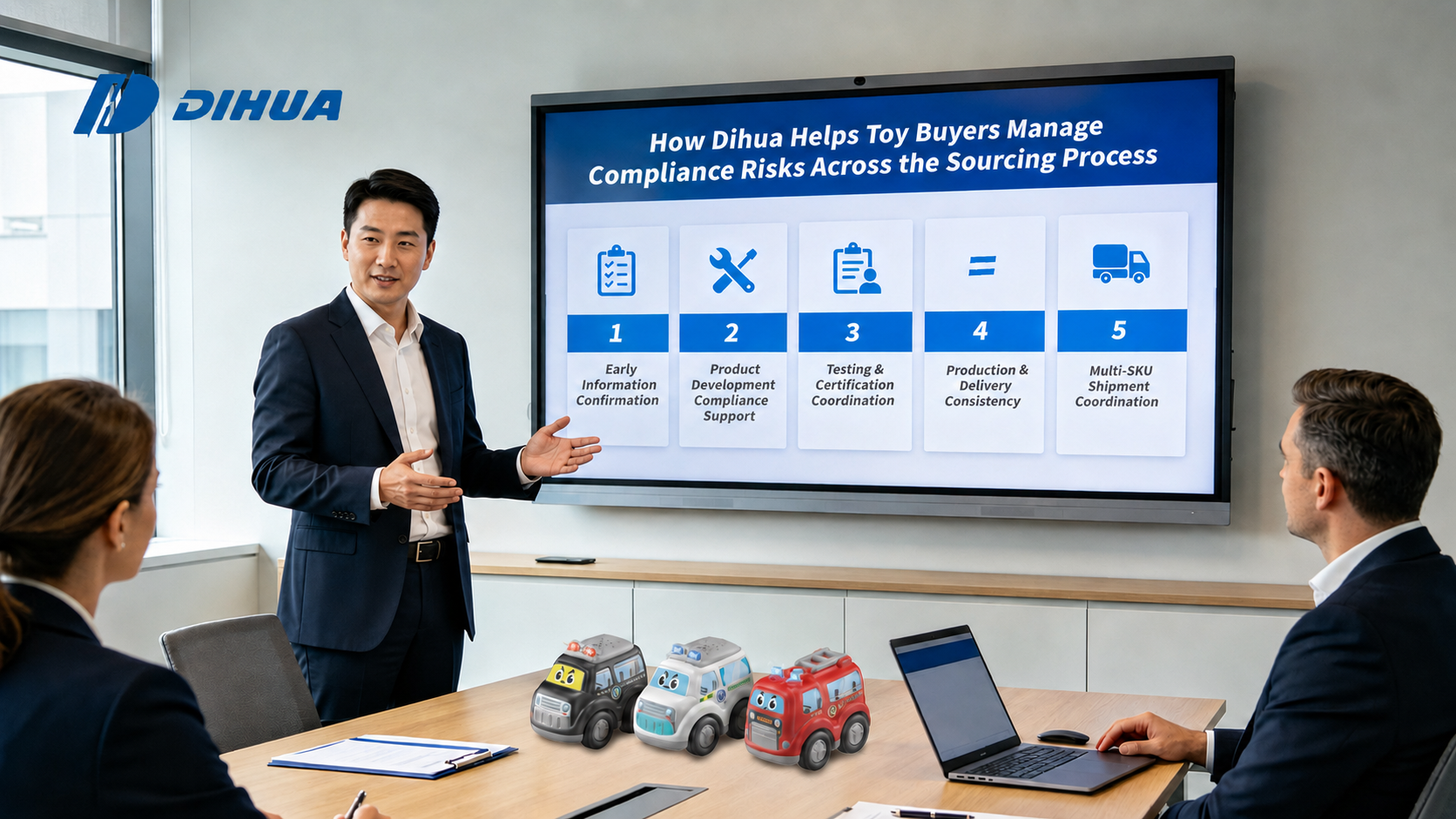
With 26 years of experience in toy export, Dihua helps buyers improve compliance management efficiency through product resource integration, OEM/ODM development support, quality management systems, and export coordination capabilities in the following key areas:
Dihua assists buyers in clarifying target market requirements, product categories, and age grading information at the project launch stage. This helps ensure that sourcing requirements are consistently understood across the supply chain and reduces development and quotation risks caused by information gaps.
During sample development, Dihua conducts basic compliance matching analysis for product structure, materials, battery solutions, and packaging information. This helps buyers identify potential risk points at the design stage and reduce later modification costs.
Based on the requirements of third-party testing organizations, Dihua assists in checking the consistency of the testing version, product structure, and documentation before products are submitted for testing. This helps improve the first-time pass rate and reduce repeated testing or report mismatches.
Through its QC system and production process control, Dihua helps ensure that mass-produced goods remain consistent with confirmed samples in terms of structure, functions, materials, packaging, and labeling. This reduces compliance risks caused by production deviations.
For multi-SKU and multi-factory projects, Dihua provides packaging checks, document organization, cargo consolidation, and shipment coordination support. This helps reduce delivery risks caused by scattered information or version inconsistencies.
Whether it is standard product sourcing or an OEM/ODM project, Dihua is committed to helping customers identify risks earlier across the sourcing process, improve supply chain coordination efficiency, and support smoother product entry into the target market.
If you are looking for a one-stop toy supply chain partner covering product development, compliance support, quality management, and export coordination, contact Dihua to explore how we can support your next sourcing project.
Toy buyers should check compliance requirements of target market, regulatory updates, age grading, product safety risks, OEM/ODM modifications, packaging warnings, and final compliance documents. These items help buyers confirm whether the product, testing plan, packaging information, and shipping documents remain consistent before the project enters sampling, production, or delivery.
Dihua’s in-house laboratory helps buyers move compliance assessment to an earlier stage of the sourcing process. Before third-party testing or mass production begins, it enables early identification of potential compliance risks related to target market requirements, product structure, materials, functions, labeling, and documentation. This helps buyers reduce unnecessary rework, repeated testing, and cost uncertainty.
For more details, please read Dihua’s article:How Dihua’s In-House Laboratory Helps Buyers Reduce Compliance Risks and Compliance Costs?
With more than 26 years of experience in toy export, Dihua provides one-stop services including product development, OEM/ODM support, supply chain management, in-house laboratory support, QA/QC systems, and export coordination. Through cooperation with third-party testing organizations such as BV, TÜV, SGS, and ITS, Dihua helps buyers identify potential compliance risks before product development, testing, production, and shipment, improve project execution efficiency, and support smoother product entry into the target market.
 Hot News
Dihua specializes in sourcing,productdevelopment,production tracking,sales,and service.
Headquarters:
No.1 Leshan Road, Longhu District, Shantou, Guangdong, China
Hong Kong office:
Unit 2401,24/F, Million Fortune Industrial Centre, No.34-36 ChaiWan Kok Street, Tsuen Wan, NT, Hong Kong
Copyright © Shantou Dihua Trading Co.,Ltd. All Rights Reserved Privacy Policy
 EN
EN
 FR
FR
 JA
JA
 RU
RU
 ES
ES