According to Future Market Insights, the licensed toy market is set to grow from USD 31.7 billion in 2025 to USD 50.1 billion by 2035, reflecting a CAGR of 4.7%. As the global licensed toy market expands, product portfolios become more complex, compliance requirements vary across more markets, and the scope of supply chain management (SCM) continues to increase. In this context, the focus of IP licensing partnership has gradually shifted—from prioritizing market expansion and sales capability to placing greater emphasis on design and engineering, multi-market compliance, quality assurance & batch-to-batch consistency, as well as operational reliability.
For brands, these four execution capabilities play a central role in helping brands manage risk, protect brand integrity, and maintain predictable performance in licensing programs.
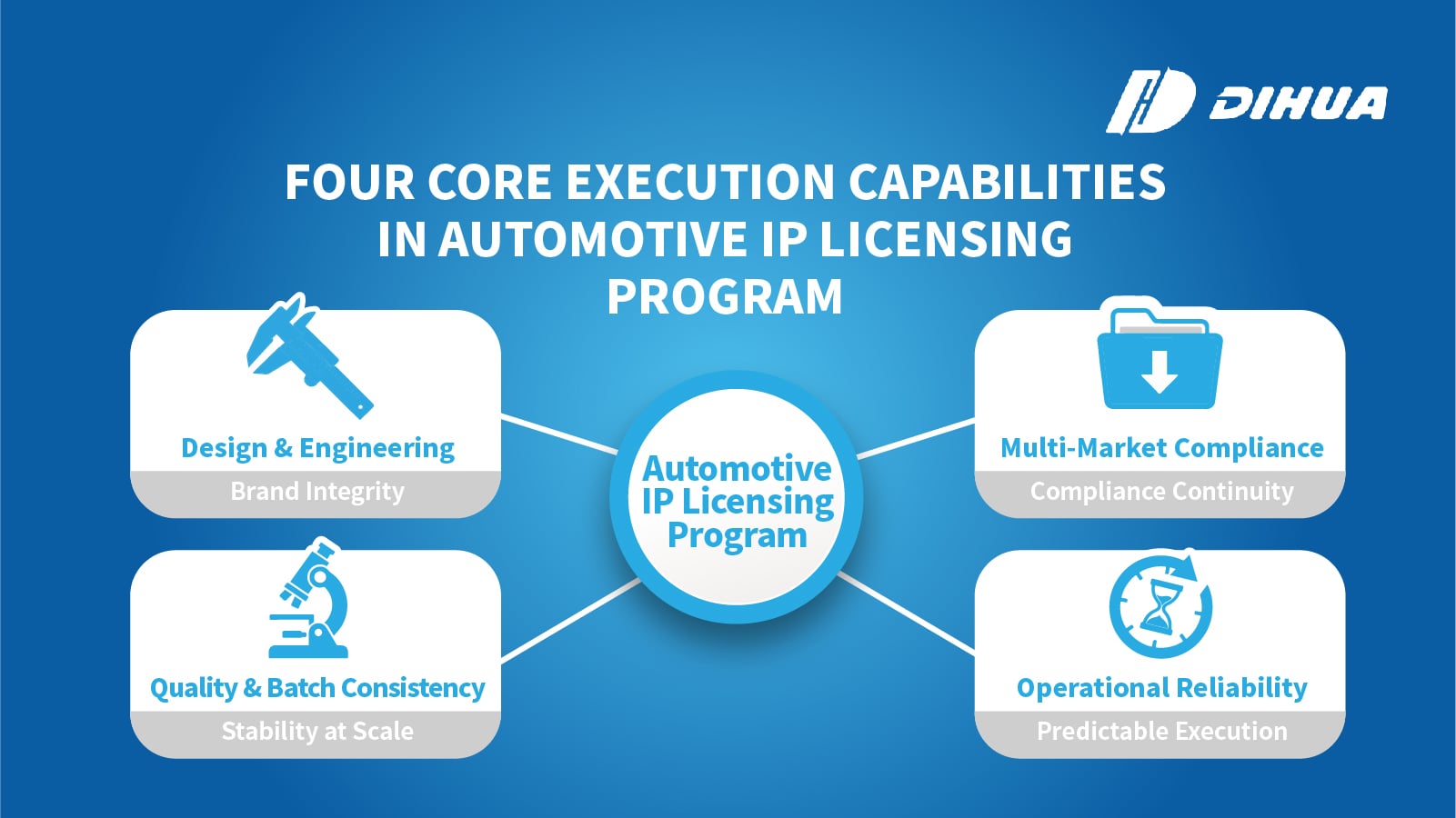
In automotive IP licensing programs, partners that demonstrate strong design and engineering execution, multi-market compliance management, consistent quality assurance and batch stability, as well as a reliable operational structure are better positioned to support predictable program performance throughout the licensing cycle and facilitate coordinated multi-market rollout. As a result, these four capabilities have become key evaluation dimensions for brands when selecting IP licensing partners.
The following four aspects further illustrate how these capabilities function within brand risk management and brand protection frameworks.
Automotive brands maintain highly codified design languages, dimensional standards, and official color systems. Without disciplined design and engineering governance, minor deviations in proportions, surface treatment, or color accuracy may accumulate during development and tooling stages. Once scaled into mass production, such inconsistencies can dilute brand identity, weaken perceived quality, and create misalignment between licensed products and the original vehicle standards.
Compliance requirements often differ between the EU, North America, and other target markets, making region-specific documentation alignment essential—particularly in officially licensed car programs where brand exposure and regulatory scrutiny are typically higher.
For brands, compliance sustainability is closely tied to risk management and brand protection. Regulatory gaps may lead to shipment delays or product recalls, which can create reputational exposure for licensed brands and disrupt retail rollout plans.
In automotive IP licensing, where visual precision and detail accuracy directly influence brand perception.
Even minor variations in paint tone, logo alignment, molding definition, or surface finishing can affect presentation consistency across stores and regions, and may introduce additional review, rework, or corrective actions during rollout.
In official licensed car programs, operational reliability is reflected in disciplined control over key engineering and approval milestones. Body proportion restoration, paint tone consistency, logo placement accuracy, electronic system calibration, and overall unit stability testing must progress in alignment with defined engineering validation stages and brand approval checkpoints. These activities are further synchronized with compliance documentation preparation, packaging confirmation, and retail launch windows to maintain execution continuity.
When multiple SKUs are introduced simultaneously, execution complexity increases. Minor deviations at critical checkpoints may lead to cascading delays, approval bottlenecks, or shipment misalignment with promotional calendars, potentially affecting launch readiness and retail rollout timing.
Taken together, these four execution capabilities form an integrated governance structure within automotive IP licensing programs. For leading automotive brands, prioritizing these four execution capabilities in IP licensing partner selection supports more structured risk oversight, helps preserve brand integrity, and enhances timeline predictability within an increasingly complex global licensing environment.
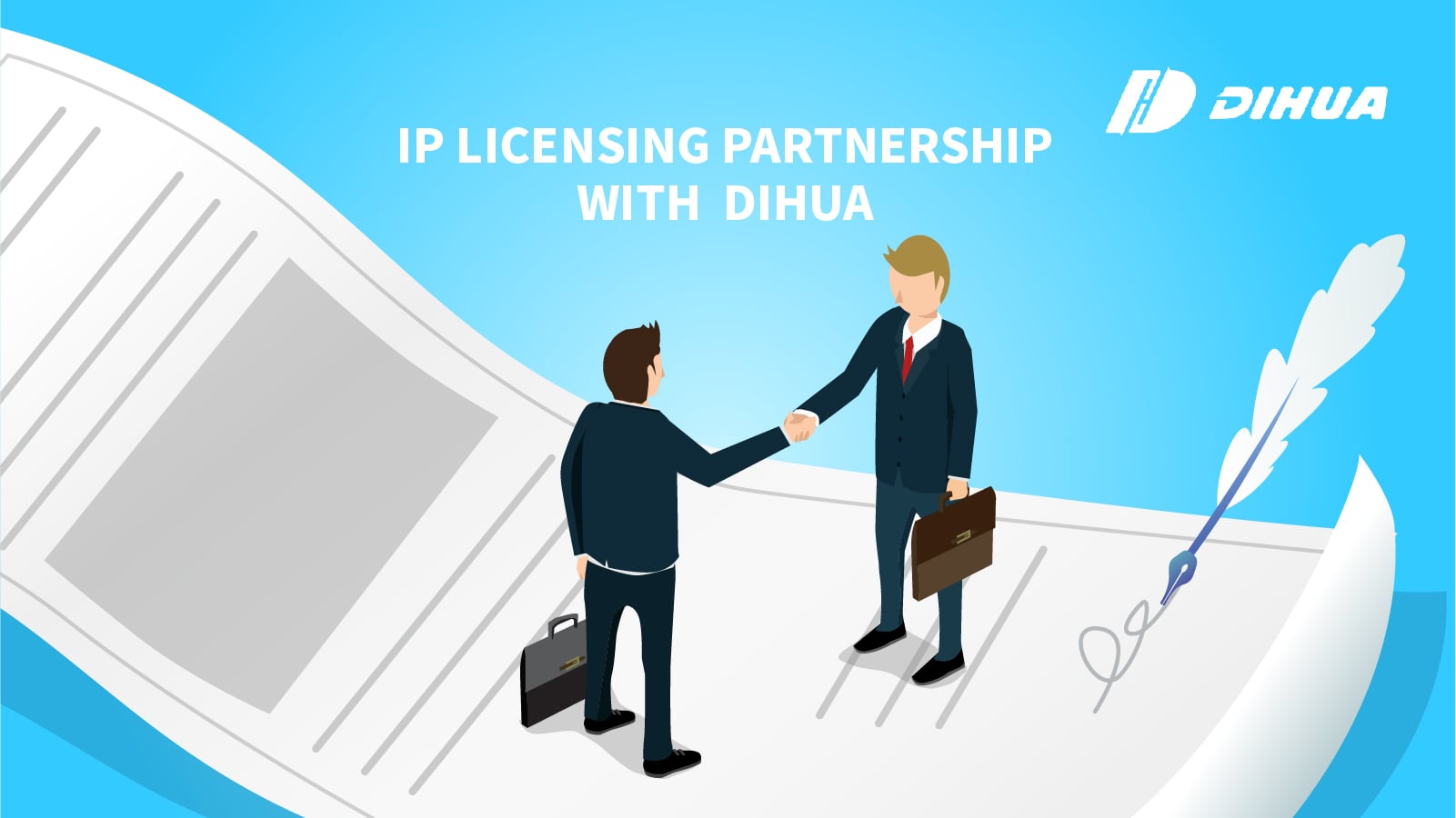
Through its continued engagement in automotive IP licensing programs, Dihua has established formal licensing partnerships with several globally recognized automotive brand owners, including Toyota, Citroën, and Mitsubishi Motors.
In officially licensed automotive programs, Dihua has established a structured execution framework and defined accountability mechanisms built around design and engineering, multi-market compliance, quality assurance & batch-to-batch consistency, as well as operational reliability. This framework supports coordinated progress across development, production, and delivery stages.
Under formal licensing agreements, Dihua has developed and manufactured multiple officially licensed RC vehicle models within the Fast Gearz series, including the Toyota Yaris WRC RC Car, Citroën C3 WRC RC Car, and Mitsubishi Montero Evolution RC Crawler.
Licensing partnership with Toyota, Citroën, and Mitsubishi Motors further demonstrate Dihua’s systematic execution capabilities in officially licensed automotive programs, with these capabilities applied consistently throughout the licensing lifecycle.
The following section further outlines how Dihua applies these four execution capabilities in practice within its automotive IP licensing programs.
In officially licensed automotive programs, Dihua focuses on balancing design fidelity and manufacturing feasibility, providing the following support:
· Controlled 3D modeling and dimensional validation to verify critical proportions and brand logo positioning at the development stage.
· Early-stage feasibility analysis and tooling risk assessment to identify structural and process factors that may affect mass production consistency.
· Pre-production engineering refinement aimed at improving assembly precision and surface finish stability.
· Systematic alignment with licensed brand technical guidelines to ensure design outputs meet formal approval requirements.
For brands planning IP licensing initiatives or evaluating potential manufacturing partners, disciplined design and engineering execution helps maintain brand standards and production stability at scale.
In officially licensed automotive programs, Dihua addresses multi-market compliance differences and varying approval timelines through a structured compliance coordination framework, including:
· Regional regulatory mapping and documentation alignment in accordance with EN71 (EU Toy Safety), CPSIA and ASTM F963 (North America), and reach material requirements, ensuring traceable test pathways and documentation readiness across markets.
· Early verification of packaging and labeling compliance against target market regulations to reduce the likelihood of late-stage revisions.
· Internal structural and material pre-testing conducted in Dihua’s in-house laboratory prior to submission to accredited third-party laboratories.
· Final certification completed by qualified external laboratories, with internal pre-validation designed to reduce approval uncertainty.
Through this structured compliance coordination framework, potential compliance risks are identified and addressed earlier in the process, rather than being managed only at the final stage. For brands, this forward-aligned approach supports greater approval predictability and coordinated multi-market launch planning.
To meet the visual precision and detail consistency required in officially licensed automotive products, Dihua operates a staged control mechanism within its Quality Management System (QMS), including:
· Pre-production golden sample approval serving as the benchmark for subsequent manufacturing and inspection.
· In-line inspection checkpoints during production to monitor key visual and structural control points.
· Controlled color verification procedures to maintain paint tone variations within defined tolerance ranges.
· Batch-coded traceability records enabling batch-level production tracking.
· Final pre-shipment random inspections to verify overall consistency.
The objective of this system extends beyond single-batch compliance; it is structured to sustain stable performance across multiple shipment cycles. For brands, consistent batch output helps reduce retail-side corrective actions and maintain presentation uniformity across regions and channels.
To maintain sustainable program execution, Dihua leverages its integrated manufacturing-and-trading model to implement centralized project tracking and milestone governance mechanisms, including:
· Defining key approval checkpoints aligned with engineering validation stages and brand review schedules.
· Coordinating compliance documentation, packaging confirmation, and mass production scheduling within aligned timelines.
· Cross-functional collaboration across R&D, quality, procurement, compliance, and logistics teams to maintain a unified execution.
· Clearly defined roles and structured escalation pathways to minimize decision delays and communication gaps.
When multiple SKUs are developed concurrently, these mechanisms help mitigate risks associated with milestone deviations. For brands, structured operational coordination enhances execution continuity and timeline predictability throughout the licensing lifecycle.
Through disciplined design and engineering execution, sustainable multi-market compliance, controlled quality assurance & batch-to-batch consistency, and structured operational reliability, Dihua delivers tangible value to brands:
· Strengthened supplier qualification and market entry readiness, contributing to a more structured onboarding process and clearer market entry planning.
· Improved project launch preparedness and execution rhythm, supporting more coordinated program initiation.
· Enhanced regulatory readiness across multiple markets, facilitating structured cross-regional review and approval coordination.
· Supported supply continuity throughout the licensing cycle, helping maintain aligned delivery schedules and stable partnership.
For brands exploring IP licensing programs or evaluating potential manufacturing partners, we invite you to visit Dihua’s official licensed car portfolio on website(www.dihuatoys.com) to review our automotive licensing experience.
If you have ideas or are considering future IP licensing initiatives, you are welcome to connect with the Dihua team for further discussion.
 Hot News
Dihua specializes in sourcing,productdevelopment,production tracking,sales,and service.
Headquarters:
No.1 Leshan Road, Longhu District, Shantou, Guangdong, China
Hong Kong office:
Unit 2401,24/F, Million Fortune Industrial Centre, No.34-36 ChaiWan Kok Street, Tsuen Wan, NT, Hong Kong
Copyright © Shantou Dihua Trading Co.,Ltd. All Rights Reserved Privacy Policy
 EN
EN
 FR
FR
 JA
JA
 RU
RU
 ES
ES