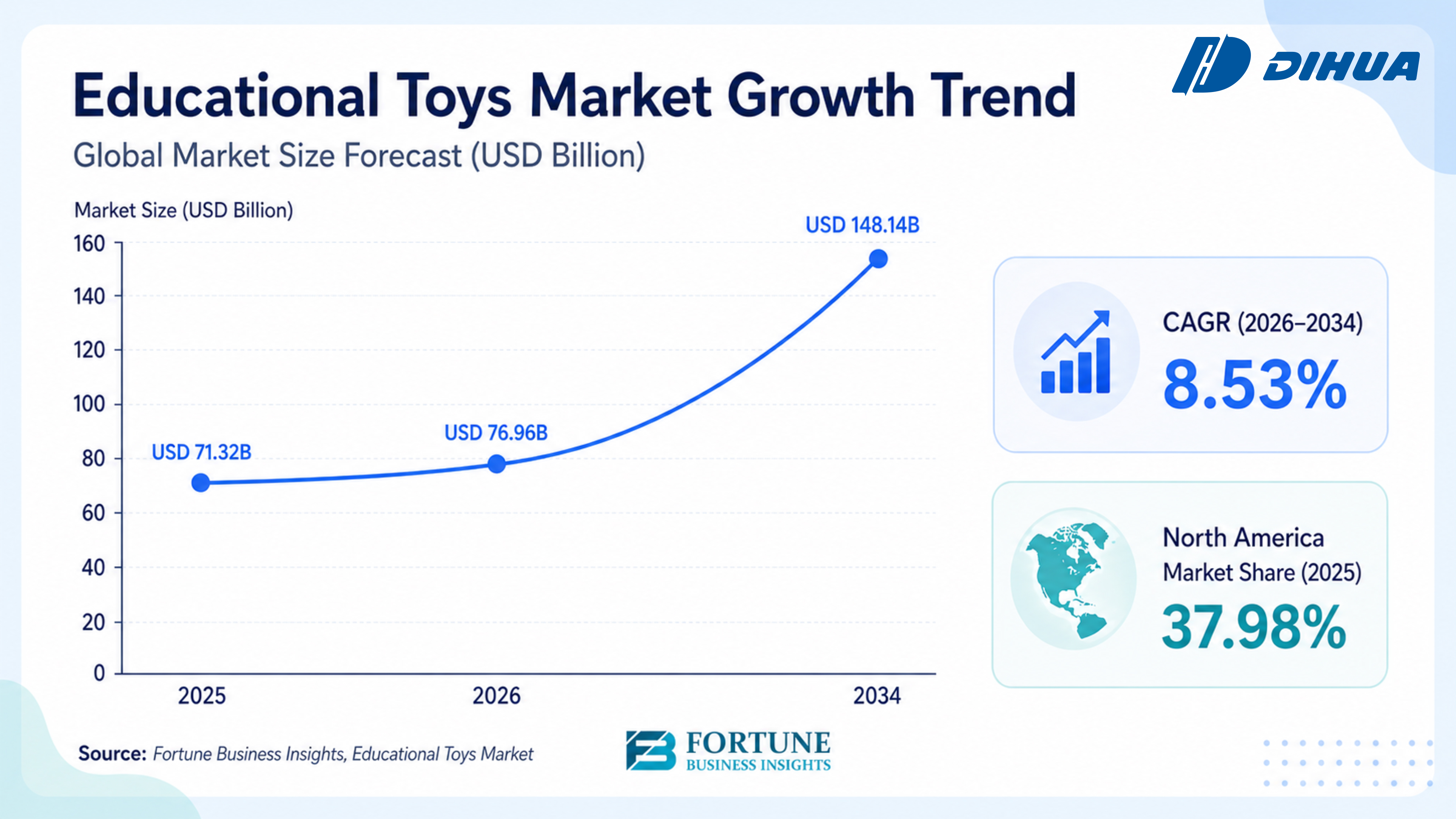
According to Fortune Business Insights, the global educational toys market is valued at USD 71.32 billion in 2025 and is projected to grow from USD 76.96 billion in 2026 to USD 148.14 billion by 2034, growing at a compound annual growth rate (CAGR) of 8.53% during the forecast period. This growth reflects the continued expansion of demand for early learning support, cognitive development, skill-building activities, hands-on exploration, and long-term play value.
For toy buyers, a competitive SKU is no longer defined only by its educational value. It must also support a clear assortment structure, effective retail merchandising, and provide parents with an easy-to-understand purchasing rationale.
Against this backdrop, wooden pretend play toys are emerging as a category worth attention within educational toy assortments. Compared with single-focus cognitive learning toys, wooden pretend play products typically offer stronger real-life scenario relevance, higher interactivity, and longer play value.
Taking the Happy Earth Wooden Tea Play Set as an example, this type of scenario-based wooden pretend play toy can serve as a serve as incremental SKU within educational toy assortments, while also expanding how the category is expressed across both retail and e-commerce channels.
The Happy Earth Wooden Tea Play Set should not be viewed simply as a standalone wooden toy. Instead, it should be positioned as a scenario-based wooden tea play set that integrates pretend play interaction, preschool developmental needs, gift positioning, and wooden toy category expansion value. This positioning allows buyers to evaluate its sourcing value from the perspective of product assortment, channel communication, and consumer messaging.
Many wooden educational toys in the market are primarily focused on early learning functions such as colors, shapes, numbers, matching, stacking, or basic logical training. While these products are important for foundational cognitive development and hands-on ability building, their play patterns are often limited to structured learning tasks.
When a wooden toy assortment relies too heavily on puzzles, building blocks, or cognitive learning products, it may lack sufficient lifestyle-based interaction and scenario-driven play value. The Happy Earth Wooden Tea Play Set helps address this gap by introducing a more lifestyle-oriented wooden pretend play SKU through a tea party scenario, extending the assortment from learning-focused play to imaginative life simulation and interactive pretend play experiences.
For retailers, importers, and distributors, this type of pretend play wooden toy not only complements the play-level hierarchy within traditional wooden educational toy assortments, but can also work alongside wooden play food, wooden kitchen sets, and other wooden pretend play products to create a more complete thematic assortment structure.
As a result, Happy Earth Wooden Tea Play Set is not only a standalone SKU, but also an effective assortment expansion item within the broader wooden educational toy category.
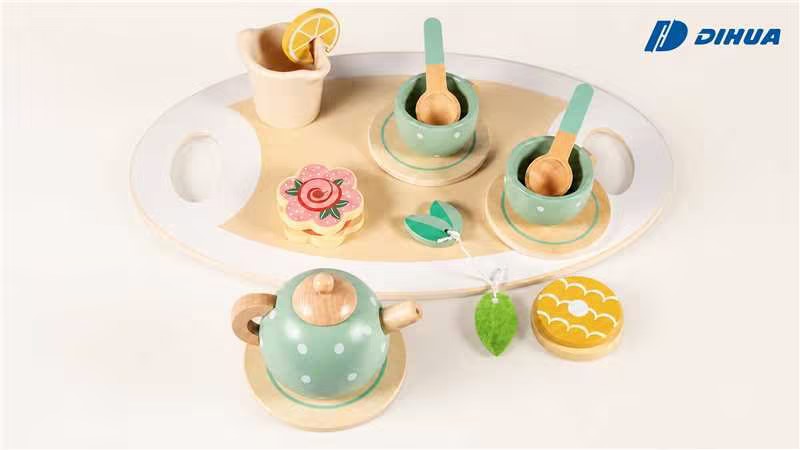
The Happy Earth Wooden Tea Play Set features a complete tea party scenario design. The 14-piece set includes a teapot, cups, coasters, tray, spoon, and simulated dessert accessories. Compared with educational toys that require additional explanation, this lifestyle-based scenario and complete accessory system are easier for consumers to understand, while also being more suitable for retail shelves, e-commerce product pages, catalogs, and gift assortment presentations.
For toy buyers, a clearly defined tea party theme helps reduce communication costs at the retail level. Retailers can present the product concept more intuitively, while parents can more quickly understand its play pattern, interactive value, and gifting relevance. This improves the retail communication efficiency of wooden pretend play toys within broader educational toy assortments.
In educational toy sourcing, buyers are not only expected to evaluate clear product positioning, but also need to communicate the developmental value of a SKU to both retail channels and end consumers. Compared with single-skill learning toys, the Happy Earth Wooden Tea Play Set adopts an open-ended tea party pretend play design, integrating language development, social interaction, fine motor skills, and early cognitive learning into a natural, everyday play scenario.
During tea party pretend play, children can practice naming objects, sorting accessories, arranging tea sets, taking turns, sharing, and engaging in simple conversational exchanges. These interactions allow the product to move beyond being perceived simply as a wooden toy set, and instead support a clearer educational value narrative.
For retailers, importers, and distributors, this type of developmental value is easier to translate into commercial messaging. It can be clearly communicated across product pages, catalog descriptions, gift recommendations, and educational toy assortments, helping buyers articulate both the long-term play value and developmental benefits of this wooden pretend play product.
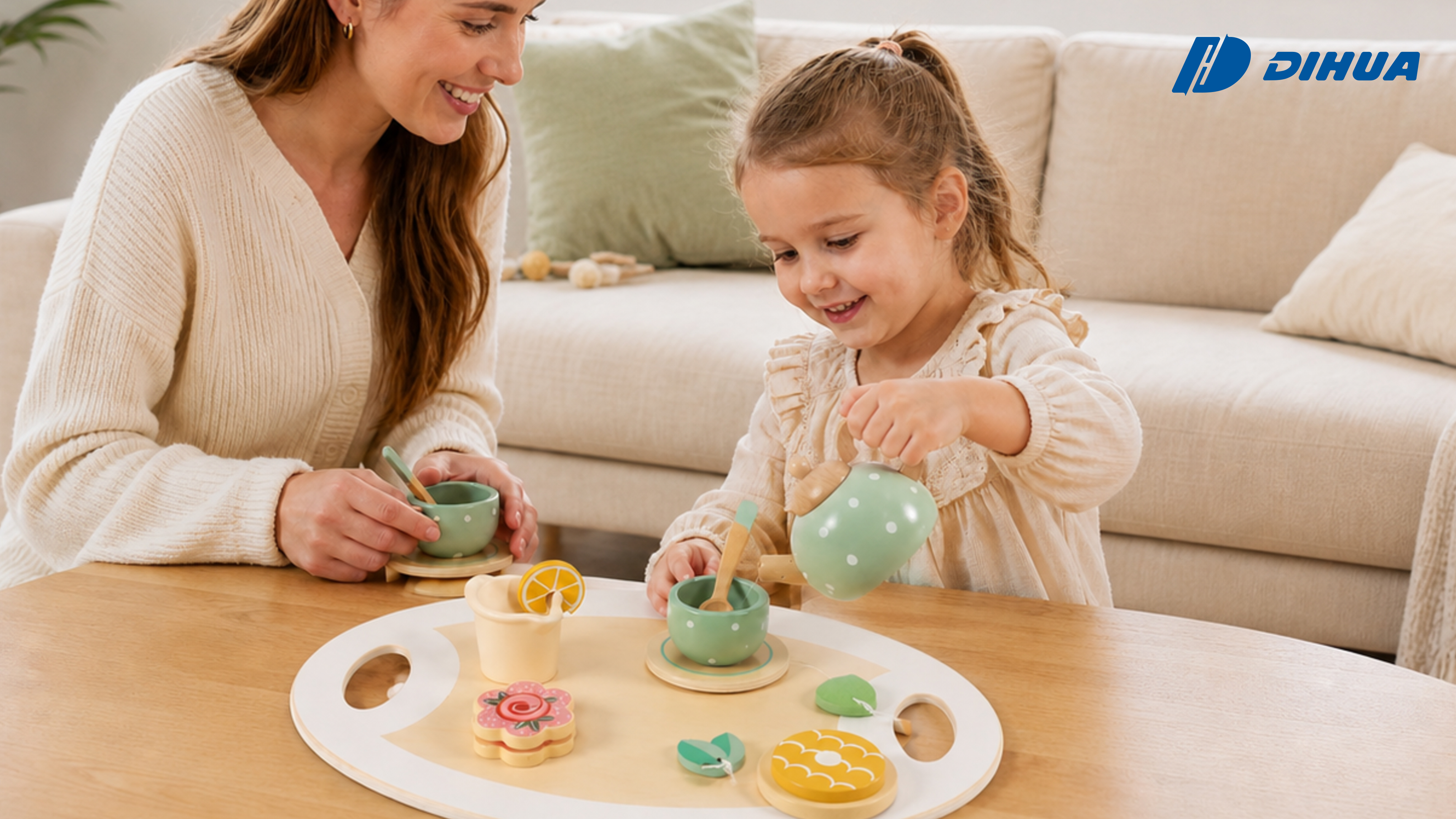
In educational toy sourcing, material selection not only affects product appearance but also plays a key role in how buyers position a product within a category. Wooden material generally delivers higher perceived value and aligns more easily with premium toy ranges, and gift-oriented assortments.
Compared with low-cost plastic pretend play toys, the Happy Earth Wooden Tea Play Set uses safe natural wood materials with fine, consistent grain and a smooth surface finish. This provides advantages in visual texture, structural stability, and gift positioning.
At the same time, a well-structured and consistently manufactured wooden toy set can extend product lifecycle performance and reduce after-sales risks associated with fragile materials or low perceived value positioning.
The Happy Earth Wooden Tea Set is clearly positioned for children aged 3 and above. This age grading allows buyers to quickly categorize it within preschool toys, pretend play toy sets, and related educational toy segments, reducing product matching complexity. A clear age label also helps end consumers filter products more efficiently, improving retail decision-making and conversion efficiency.
Color box packaging further supports both retail and e-commerce presentation needs. In offline retail environments, it helps clearly communicate the tea party theme and improves shelf visibility. In online channels, it supports product photography, set-content explanation, and gift-oriented positioning.
For toy buyers, a clear age positioning combined with structured packaging helps the product better align with retail merchandising, e-commerce listing, and gift channel requirements. This makes the wooden tea set easier to integrate into wooden educational toy assortments and broader pretend play toy sourcing programs.
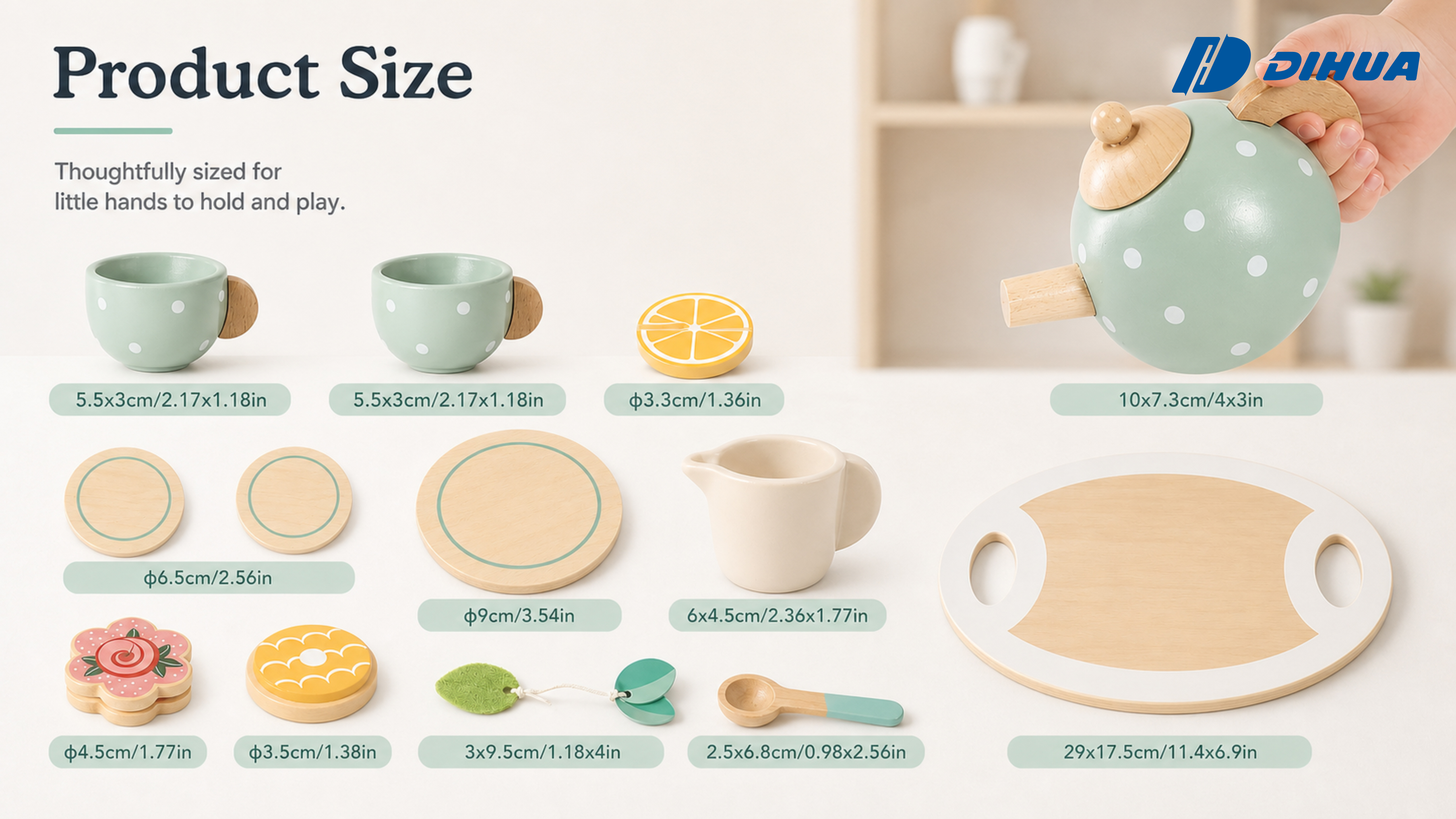
In toy sourcing, product dimensions directly influence parents’ perception of age appropriateness and safety, while also affecting in-store presentation and consumer purchasing decisions at the retail level.
The Happy Earth Wooden Tea Play Set is designed with careful consideration of the grip strength and handling ability of children aged 3+. Its sizing structure ensures that all components are large enough to reduce choking risk while remaining appropriately scaled for small-hand operation. It allows children to naturally develop fine motor skills and hand-eye coordination through activities such as pouring, serving, and arranging tea party elements.
For retailers and distributors, the moderate and well-balanced sizing improves shelf compatibility and packaging standardization. At the same time, the differentiated proportions of accessories (larger teapot, medium cups, smaller dessert pieces) enhance visual hierarchy in product display, increasing shelf appeal and merchandising effectiveness.
In addition, precise alignment between product dimensions and age grading helps reduce consumers hesitation during purchase, improves conversion efficiency, and minimizes after-sales concerns caused by size mismatch.
For buyers planning wooden educational toy assortments, this scientific sizing design not only supports child development needs but also enhances overall retail adaptability and communication efficiency at the point of sale.
For toy buyers, identifying suitable wooden educational toys is only the first step in the sourcing process. To turn product selection into a fully executable sourcing program, buyers also require structured support across product matching, assortment planning, documentation coordination, compliance communication, sampling development, and production follow-up.
Dihua is a China-based toy sourcing and supply chain partner with more than 25 years of export experience, serving global retailers, importers, distributors, and brand owners.
In wooden educational toy programs, buyers typically require more than a single attractive SKU. They need a balanced assortment that covers different learning scenarios, price tiers, age groups, retail channels, and gift occasions.
With extensive toy product resources, over 1,000,000 continuously updated SKUs, and a 6,000㎡ showroom, Dihua helps retailers, importers, and distributors evaluate wooden toy options more efficiently.
By combining product matching with assortment planning, Dihua supports buyers in building a more complete wooden educational toy portfolio that fits retail shelf planning, e-commerce presentation, and seasonal sourcing programs.
Because wooden toys are closely linked to material sourcing and sustainability requirements, buyers often require clearer documentation before project execution. This is especially important for retailers and importers serving European and U.S. markets.
Wooden toy sourcing may involve material origin documentation, supplier qualification files, factory background checks, and audit requirements. These factors directly influence product approval, retail channel communication, and long-term supplier evaluation.
Dihua supports FSC-related material coordination, supplier documentation review, factory background verification, and audit assistance based on project requirements. This enables buyers to evaluate material sourcing and supplier reliability at an earlier stage, rather than addressing documentation only after product selection.
Once material sourcing and supplier information are aligned, compliance management and quality control become the next critical focus areas. Wooden educational toys require systematic evaluation of age grading, surface finishing, edge safety, small parts structure, coating materials, raw material compliance, packaging warnings, and overall structural safety.
Dihua provides support through its certification team, in-house laboratory, and quality control department, along with cooperation with third-party testing organizations including BV, TÜV, SGS, and ITS.
For wooden toy projects, this system helps buyers coordinate testing communication before mass production, define key quality control checkpoints, and verify product consistency. Early alignment on compliance and QC reduces revision risks and ensures smoother alignment with target market requirements.
In addition to existing product sourcing, some buyers require differentiated wooden pretend play toys for private-label programs, exclusive assortments, or seasonal product development. In these cases, design and sampling become a key part of the development process.
Dihua supports OEM/ODM projects from concept development through to final sample confirmation. Its design and development capabilities include 3D modeling and rendering.
This integrated capability helps buyers define clearer product positioning at the development stage while improving structural safety, play value, and retail presentation, enabling more efficient commercialization of wooden toy products.

As wooden pretend play toys continue to gain importance in educational toy assortment planning, buyers increasingly require more than a suitable product. They need structured sourcing support that covers product selection, compliance coordination, sampling development, and production execution in a more efficient and connected workflow.
If you are planning a wooden educational toy program, wooden pretend play toy assortment, or OEM/ODM wooden toy project, Dihua can support you with integrated sourcing and supply chain solutions tailored to your market needs.
Dihua supports sourcing and evaluation of a wide range of wooden educational toys, including wooden tea sets, wooden kitchen toys, wooden play food, wooden pretend play sets, and other preschool wooden toy categories.
Buyers can also refer to the Happy Earth product series for reference.
Based on target markets, price positioning, retail channels, and assortment requirements, Dihua helps buyers with product matching and assortment planning to build more structured wooden toy portfolios.
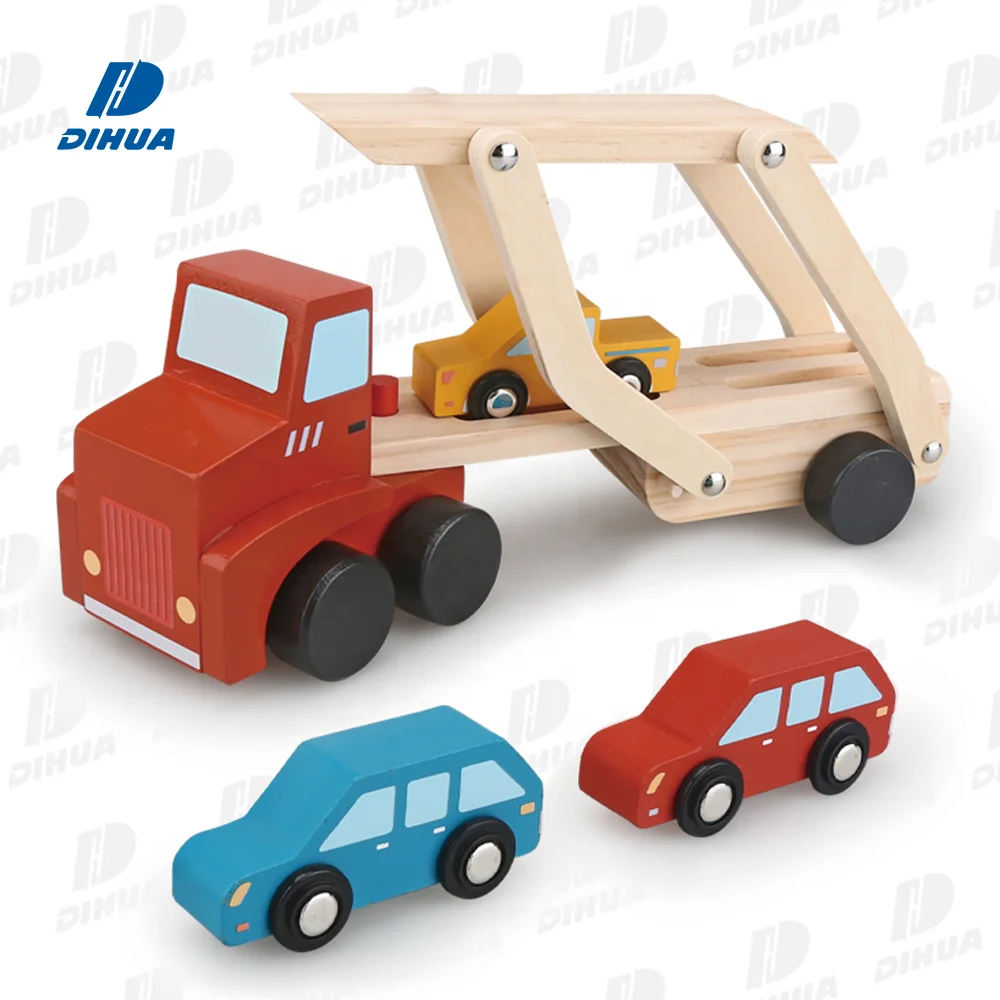
In addition to wooden pretend play toys, wooden track toys are another important category in educational wooden toy programs.
Wooden train tracks and wooden vehicle tracks are not only about the vehicle itself, but more importantly about path planning, spatial logic, cause-and-effect understanding, and creative construction.
For buyers developing wooden toy assortments, this category helps expand the product structure with a more logic-based and system-oriented play dimension.
Buyers can also refer to the Happy Earth series for reference.
Dihua will showcase wooden track toy categories as a key focus at the Hong Kong Toy Fair in January 2027, welcoming buyers to explore product details and sourcing opportunities onsite.
Yes. Dihua provides sample support for buyers.
Existing products (such as the Happy Earth series) are available for free sampling, with only shipping costs required.
To request samples, buyers can contact the Dihua team via the official website.
 Hot News
Dihua specializes in sourcing,productdevelopment,production tracking,sales,and service.
Headquarters:
No.1 Leshan Road, Longhu District, Shantou, Guangdong, China
Hong Kong office:
Unit 2401,24/F, Million Fortune Industrial Centre, No.34-36 ChaiWan Kok Street, Tsuen Wan, NT, Hong Kong
Copyright © Shantou Dihua Trading Co.,Ltd. All Rights Reserved Privacy Policy

 EN
EN
 FR
FR
 JA
JA
 RU
RU
 ES
ES