According to Emerging Markets for Intelligent Toy Robot Industry published by Market Report Analytics, the global intelligent toy robot market was valued at approximately USD 4.24 billion in 2025 and is projected to grow at a CAGR of 10.4% from 2025 to 2033. As a subcategory of electric robot toys, walking robot toys have also been identified by multiple industry reports as a contributing factor to category expansion.
However, overall category growth does not automatically mean that a specific SKU has already proven sales performance in a buyer’s own store or sales channel.
For small e-commerce sellers with limited initial inventory budgets — including Amazon sellers, independent online retailers, and first-time importers of electric toys — the goal of a first order is not simply to minimize order quantity. It is to test actual market demand through a controlled initial purchase with lower inventory commitment.
A low MOQ only solves the quantity threshold. The real factors that determine whether a trial order is commercially viable include whether the product can meet compliance requirements, whether production units can maintain consistent quality, and whether future replenishment can be executed reliably.
Many first-time buyers face similar problems during trial orders. A sample may walk smoothly, while production units show unstable movement or overheating. A sample may deliver 40 minutes of battery life, while production units last only 15 minutes due to inaccurate battery cell capacity. Packaging may include the correct warning labels in the sample stage, but miss required information during production, creating listing or platform risks.
The underlying issues usually come down to two areas: batch consistency and production quality control. If motors, battery cells, color materials, or gears are not locked through approved suppliers and approved samples, production variation may occur. If First Article Inspection (FAI), In-Process Quality Control (IPQC), or final AQL inspection is missing, defective or mixed-quality production units may enter the sales channel.
For small e-commerce sellers, the biggest risk is not simply being unable to source products. The real risk is receiving products that cannot be listed successfully, or products that are listed but fail to generate sustainable sales.
Therefore, the sourcing evaluation process should follow three checkpoints:
Checkpoint 1: Can the product be listed?
Checkpoint 2: Can production stay consistent with the approved sample?
Checkpoint 3: Can the product continue selling with stable replenishment?

Before creating a product listing, small e-commerce retailers should first confirm one key question: Can this product be sold in the target market?
If compliance requirements are not met, the product may face listing rejection or removal. If the MOQ is too high, even a trial order may create unnecessary inventory pressure. Before evaluating further sourcing details, buyers should first confirm market access, certification requirements, and first-order feasibility.
Walking robot toys are electrically powered products and may include wireless functions. Before entering the U.S. or EU market, buyers should confirm the applicable certification and documentation requirements based on the target market, product functions, and current regulatory versions.
| Market | Wireless Certification | Battery Compliance | Basic Safety |
| U.S. Only | FCC (Radio Frequency / Bluetooth / 2.4GHz Remote Control) | CPSIA Battery Testing | ASTM F963 + CPC |
| EU Only | RED (2014/53/EU) | EN62115 | EN71 + 2009/48/EC |
| U.S. + EU | FCC + RED | CPSIA + EN62115 | ASTM F963 + EN71 + CPC |
| Applicable to Both Markets | UN38.3 Transportation Testing (Required) | Confirm Approved Sample + Ensure Test Report Matches the Product Model |
Note: Infrared (IR) remote control does not transmit radio signals and generally does not trigger RED requirements. Wireless functions such as RF, Bluetooth, or 2.4GHz communication require additional wireless compliance evaluation.
A test report for a similar product does not automatically apply to the purchased model. Changes in model number, frequency, power configuration, or product version may affect report applicability.
For fully autonomous walking robot toys without wireless functions, FCC or RED requirements may not apply. However, EMC considerations still need to be reviewed. In Europe, EMC requirements under Directive 2014/30/EU apply, while in the U.S., there is no separate EMC certification process and applicable FCC Part 15 requirements for unintentional radiators should be considered.
· Walking and moving functions:
Battery-related compliance should be reviewed, including UN38.3 transportation documentation and applicable electrical toy safety requirements, such as EN IEC 62115 for Europe and CPSIA-related requirements for the U.S. market. The battery compartment should be secured to prevent battery access by children under 3 years old.
· Remote control / Bluetooth / WiFi functions:
Wireless communication functions may require additional compliance evaluation, such as FCC requirements for the U.S. market and RED requirements for the EU market.
· Basic toy safety requirements:
Buyers should also review standard toy safety requirements, including EN71 and the EU Toy Safety Directive 2009/48/EC for Europe, and ASTM F963 compliance requirements supported by a Children’s Product Certificate (CPC) for the U.S. market.
Before placing an order, buyers should evaluate whether the product can successfully enter the target sales channel.
· Amazon FBA lithium battery restrictions:
Products containing rechargeable lithium batteries may have additional warehouse and fulfillment requirements. Buyers should confirm FBA eligibility before placing the order.
· UN38.3 logistics requirement:
Lithium battery products shipped by air or sea typically require transportation-related testing documentation. Without the required reports, shipment arrangements may be affected.
· EU GPSR requirements (effective from December 2024):
Products sold in the EU may require an EU Responsible Person and Declaration of Conformity (DoC). Without meeting applicable requirements, products cannot legally enter the EU market.
· U.S. CPC requirements for children's products:
Toy products sold on Amazon U.S. may require a Children’s Product Certificate (CPC) issued by the importer or manufacturer, along with traceability information, to demonstrate compliance with applicable regulations such as CPSIA and ASTM F963.
· Packaging and instruction warnings:
Missing battery warnings, age grading information, or required safety statements on packaging and manuals may result in listing issues or product removal.
· MOQ and first-order feasibility:
For in-stock products, MOQ is typically around 50–200 pcs per SKU, while OEM/ODM customization usually starts from around 500 pcs, depending on packaging requirements and product value.
· Product MOQ vs. packaging MOQ:
Buyers should confirm product MOQ and packaging MOQ separately. A product itself may allow a lower purchase quantity, but customized color boxes, labels, or printed materials may require a higher MOQ due to printing setup costs. If customization volume is too low, these costs are spread across fewer units, increasing unit cost and reducing margin.
· Customized packaging cost control:
Some buyers print customized packaging according to the packaging MOQ, such as 500 sets, while shipping products in smaller batches based on the product MOQ. This helps maintain branding requirements while reducing upfront inventory pressure.
· Total first-order investment:
Buyers should calculate product cost, packaging cost, transportation cost, and necessary testing expenses together. Ideally, the first order should cover about two months of planned sales volume, rather than creating excess inventory before market demand is validated.
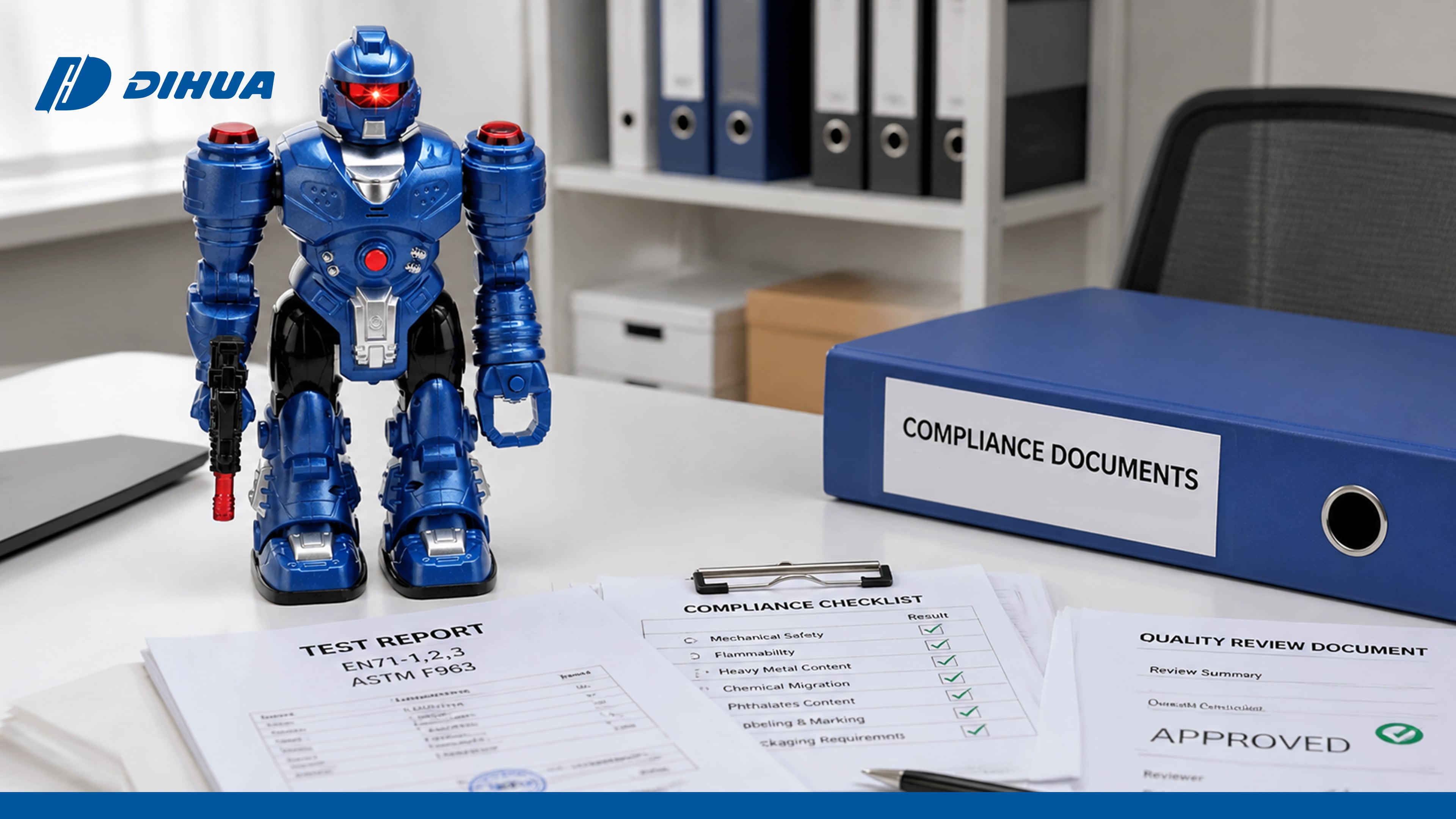
Once compliance requirements are confirmed and the product is ready for listing, buyers need to verify one key question: Will production units perform consistently with the approved sample?
Common issues such as motor stalling, inaccurate battery capacity, color variation, mixed-quality units, and high defect rates often appear during mass production.
The approved sample should serve as the reference standard for subsequent production and inspection. It should be retained, numbered, and clearly referenced in the purchase order (PO).
Buyers should also specify key component requirements in the PO, including the approved motor model, motor source, battery cell brand, acceptable capacity tolerance, and other critical configuration details. If these requirements are not clearly defined before mass production, production units may use motors, gears, or battery cells from different batches or suppliers.
For walking robot toys, variations in motor torque, noise level, gear material, mold wear, or battery cell capacity may affect startup performance, straight-line movement, turning, climbing ability, operating time, and overall product consistency.
Test reports should also match the actual product, including the target market, specific model, current product version, and battery/wireless configuration. Buyers should avoid relying on generic reports shared across similar product families.
During inspection, buyers can use AQL 2.5 sampling to conduct continuous walking tests for more than 30 minutes. The inspection should cover startup performance, walking stability, straight-line movement, turning, climbing ability, and abnormal noise.
Battery performance should also be checked during inspection, including actual battery capacity, battery cell brand, and stated capacity. This helps verify whether production units match the approved sample and the agreed specifications.
If key quality control steps are missing, including First Article Inspection (FAI), In-Process Quality Control (IPQC), or final AQL inspection, defective units may enter production batches or reach buyers. Incoming defect rates should be kept at a low level, with a target of ≤1%–2%. A 5%–10% defect rate can reduce product ratings, increase negative reviews and returns, and affect platform performance.
New product listings are often vulnerable when advertising starts, rankings begin to improve, and sales momentum begins to build. Running out of stock at this stage can interrupt conversions, weaken ranking momentum, and waste advertising spend.
Buyers should set a replenishment trigger point before inventory sells out. A practical threshold is when inventory reaches approximately 1–2 weeks of sales volume, or the defined safety stock level. The exact timing should be calculated based on actual sales speed, replenishment lead time, transportation time, and the buyer’s sales cycle.
Replenishment quantities should be adjusted based on actual sales performance to avoid excessive inventory pressure from large one-time orders. During the first-order stage, buyers should also confirm the achievable reorder lead time with the supplier, instead of assuming a fixed timeline.
Common reference points may include around 7–15 days for in-stock products and 15–45 days for customized products, depending on supplier capability and actual order conditions. These timelines should be confirmed with the supplier rather than applied as fixed standards.
Replenishment POs should continue to follow the approved sample version, including key component requirements, battery configuration, wireless configuration, accessories, and packaging details. This helps maintain consistency between the first order and future replenishment batches.
In summary, the first order for walking robot toys should be evaluated through three key checkpoints: listing feasibility, production consistency, and replenishment reliability. The seven buyer checks above help clarify whether the product can enter the target market, remain consistent with the approved sample, and continue selling without avoidable supply interruptions.

However, these requirements are standard practice for large buyers but can become a cost barrier for small and medium-sized sellers. Factory visits for FAI / IPQC, third-party inspections for every order, or maintaining an in-house QC team can quickly reduce already limited margins.
For Amazon sellers, independent store operators, and first-time importers of electronic toys, the challenge is not knowing what should be checked, but having the resources to manage every control point. That is why key verification steps should be moved earlier into the supplier selection and first-order preparation stage.
A supplier with stable production capability and established quality control processes can help reduce the burden of batch consistency management and inspection costs. Buyers should clarify requirements before the first order, lock the approved sample as the production reference, and avoid managing every quality checkpoint independently for each order.
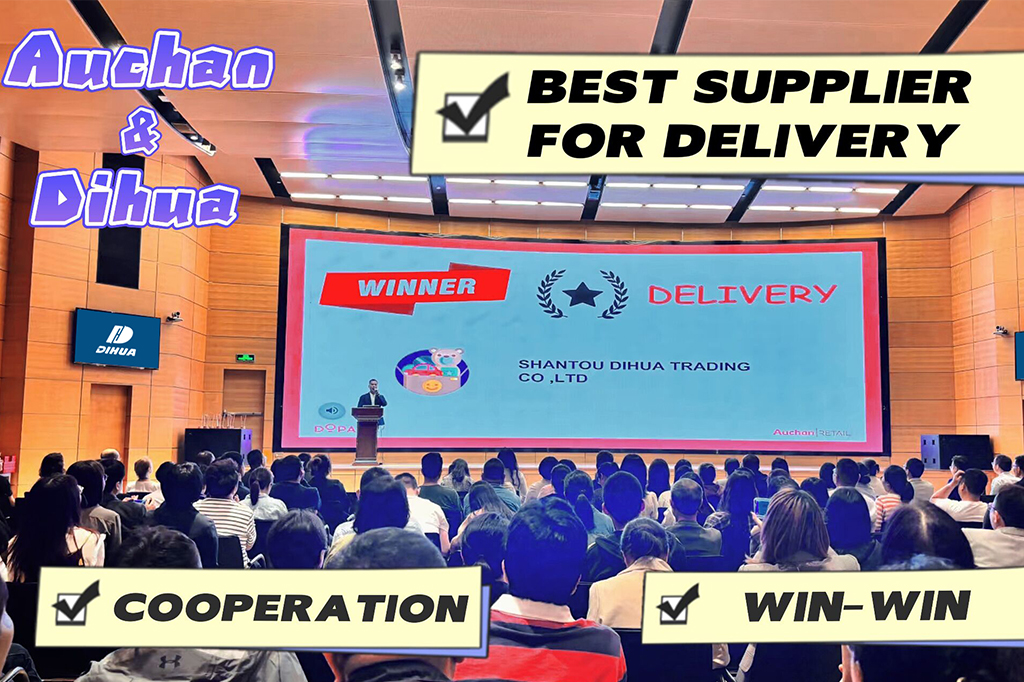
Taking Dihua as an example, with 25+ years of toy export experience since 2001, Dihua has internal capabilities covering sourcing, compliance coordination, in-house testing support, production follow-up, and full-process quality control. For walking robot toys, this helps buyers manage batch consistency for key components such as motors, batteries, and housings, while applying FAI, IPQC, and final AQL inspection processes during order execution.
Before the first order, buyers can confirm the target market, functional requirements, and trial order quantity. Dihua can then organize candidate SKU information, including MOQ, case pack, testing documentation, and first-order sourcing requirements, with the approved sample used as the reference for production follow-up and pre-shipment inspection.
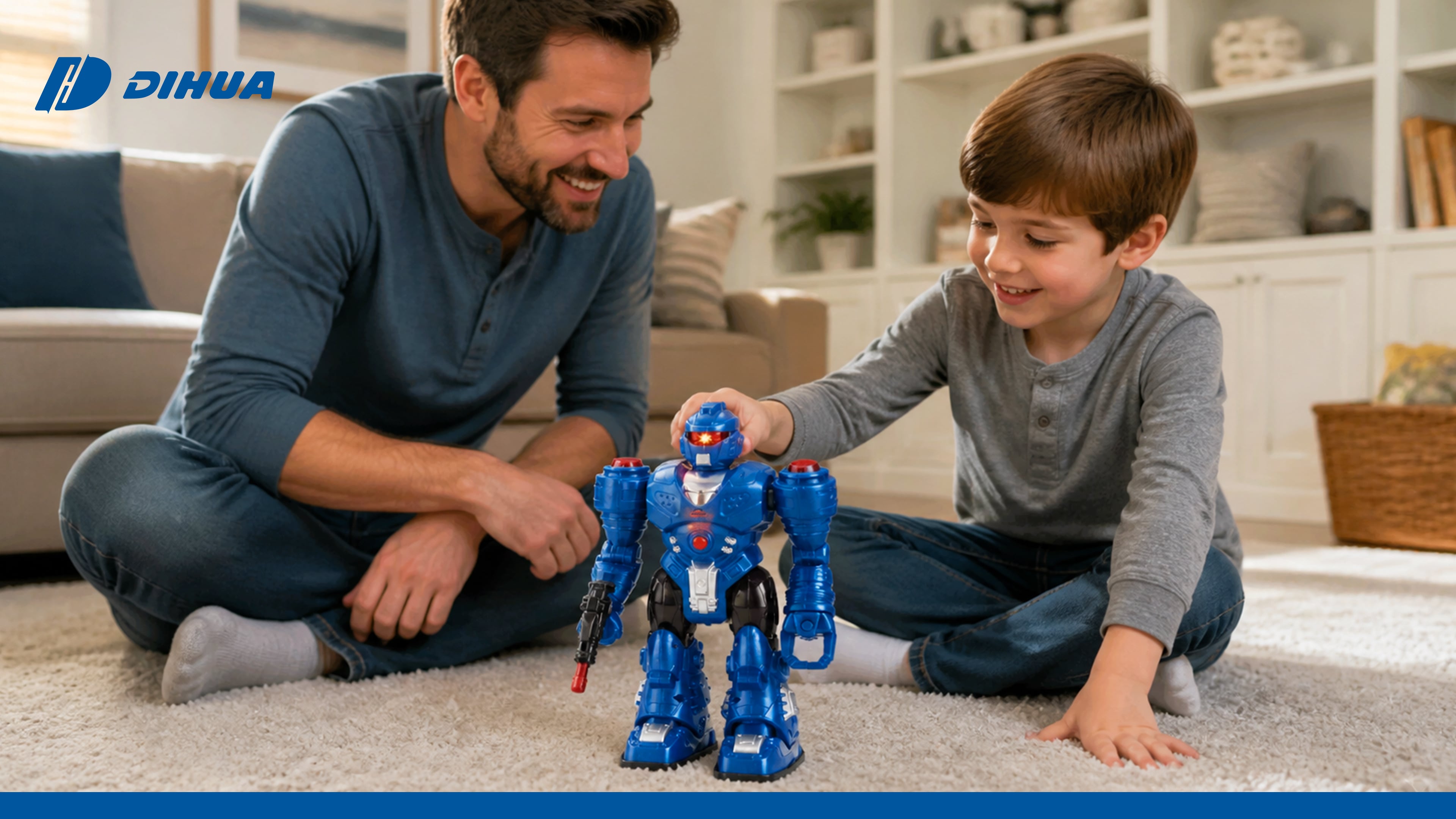
The approved sample’s walking performance, movement functions, battery configuration, light-and-sound features, accessories, and packaging requirements can be used as references for production follow-up and pre-shipment inspection. By reducing unnecessary sourcing and quality control costs, suppliers can help small sellers maintain more room for sustainable margins.
Get the Walking Robot Toys First-Order Checklist for free, or send us your target market and product link. Dihua can help identify the required certifications and confirm key first-order sourcing requirements.
A: For in-stock products, the MOQ is usually around 50–200 pcs/SKU. Customized products typically start from 500 pcs, depending on packaging size and product value. If the order quantity is too low, printing and customization costs may be spread across too few units and reduce profitability.
A: Remote-controlled robot toys may require FCC certification for the U.S. market and RED compliance for the EU market, along with applicable EMC requirements.
A: An incoming defect rate of 5%–10% can reduce product ratings, trigger negative reviews and returns, and negatively affect platform performance. FAI, IPQC, and final AQL inspection should be used to control production quality.
 Hot News
Dihua specializes in sourcing,productdevelopment,production tracking,sales,and service.
Headquarters:
No.1 Leshan Road, Longhu District, Shantou, Guangdong, China
Hong Kong office:
Unit 2401,24/F, Million Fortune Industrial Centre, No.34-36 ChaiWan Kok Street, Tsuen Wan, NT, Hong Kong
Copyright © Shantou Dihua Trading Co.,Ltd. All Rights Reserved Privacy Policy

 EN
EN
 FR
FR
 JA
JA
 RU
RU
 ES
ES