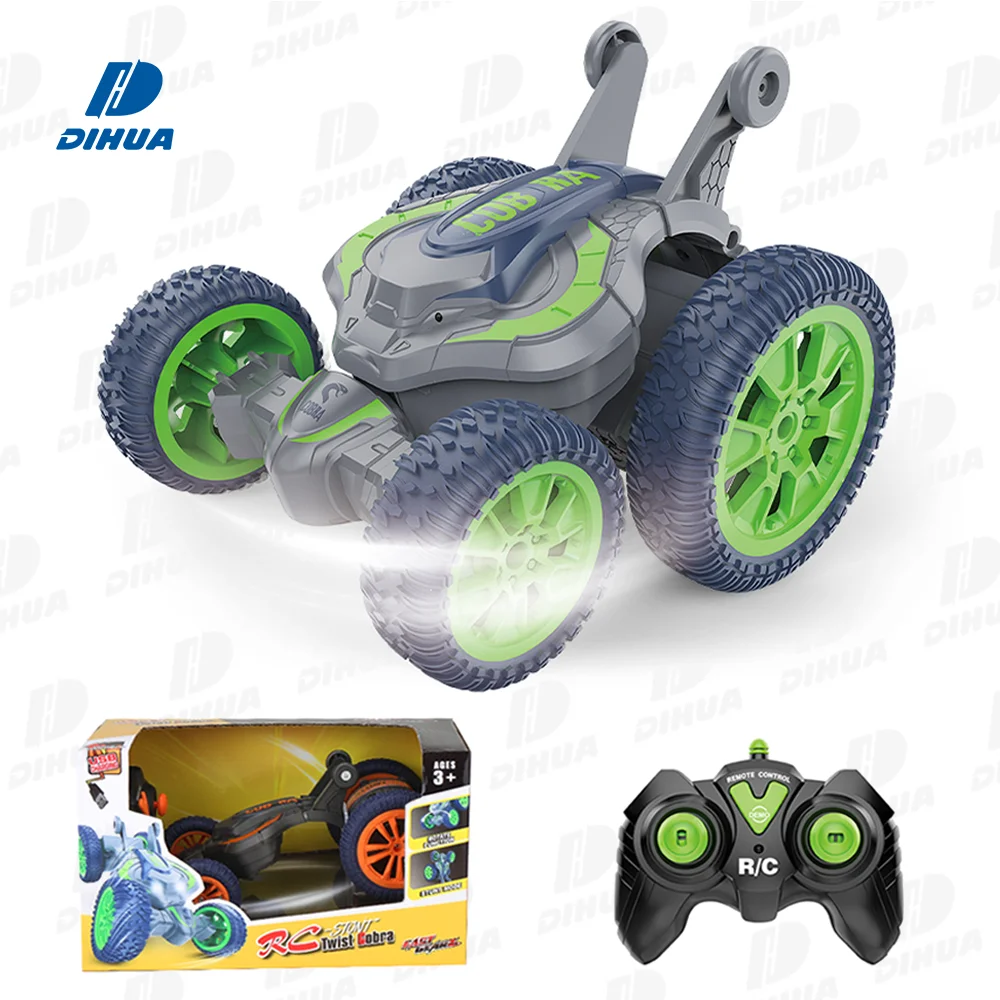
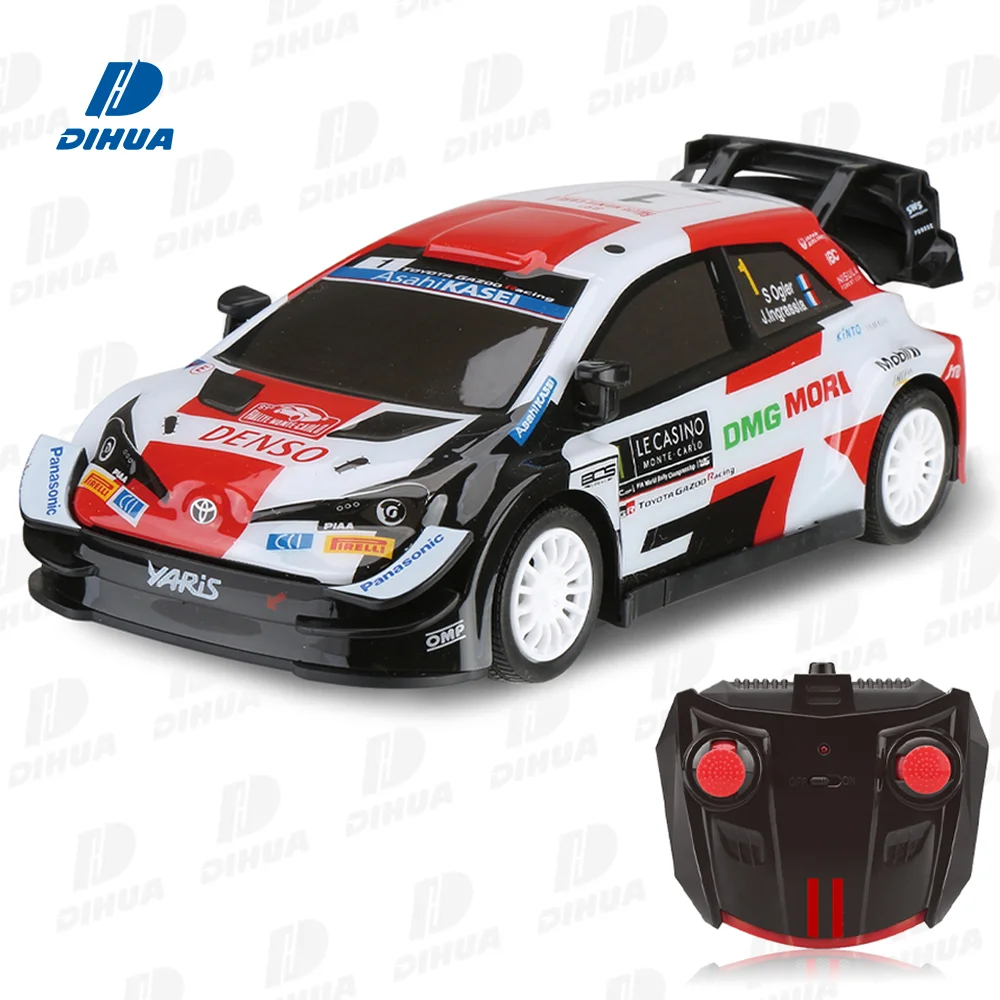
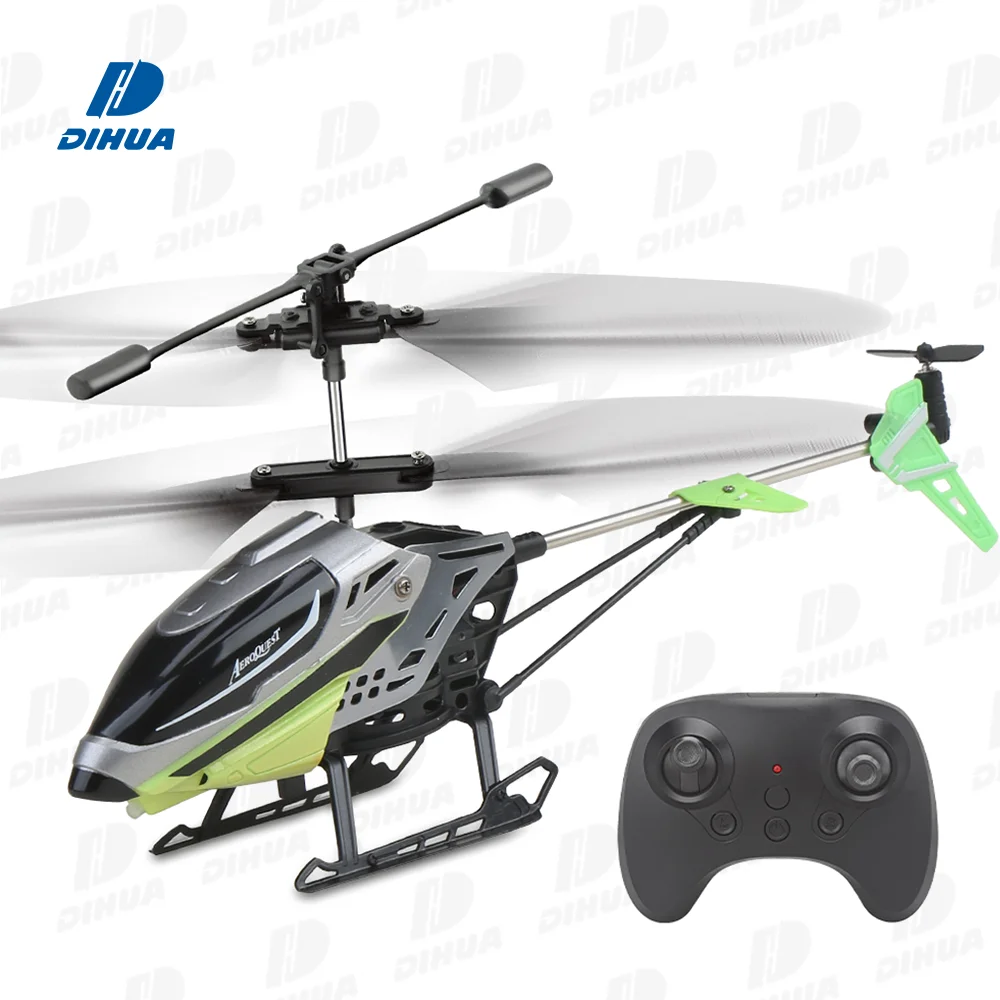
According to market research from 360iResearch, the global remote control toy car market is expected to grow from approximately USD 452 million in 2026 to USD 1.034 billion by 2032, with a projected CAGR of 14.44%. With continued market growth, RC stunt cars have become one of the toy categories that can create stronger visual differentiation in supermarket assortments.
However, for supermarket buyers, the challenge is not simply identifying whether an RC stunt car includes flipping, spinning, or drifting functions. The key is evaluating whether these features can create clear shelf differentiation while supporting the target retail price, consumer expectations, and future replenishment. This article explains how supermarket buyers can evaluate RC stunt cars with stronger shelf value through six key stages: vehicle type identification, SKU positioning, product and packaging evaluation, sample testing, order confirmation, and supplier assessment.
Before evaluating samples, supermarket buyers should first classify each product by stunt type and understand its role within their existing RC stunt car assortment.
| Product Type | Key Features | Key Evaluation Points |
| Double-Sided Flip Cars | Double-sided driving, flipping, rolling | Flip success rate, continued driving after flipping, wheel durability |
| 360° Spin and Twist Cars | In-place spinning, sideways movement, twisting transformation | Drive mechanism, surface requirements, remote control response |
| Drift RC Cars | Drifting, circular drifting, continuous spinning | Drift wheel durability, performance on smooth hard surfaces, control difficulty |
| Gesture-Controlled or Dual-Mode Stunt Cars | Gesture control combined with traditional remote control | Pairing, recognition accuracy, age suitability, and power configuration |
| Wall-Climbing or Transforming Cars | Wall adhesion, mechanical transformation, or special movements | Applicable surfaces, mechanism reliability, and after-sales risks |
RC stunt car product listings often combine multiple features such as double-sided driving, 360° flipping, 4WD, 2.4GHz, drifting, and LED lights within a single product title. Since individual feature terms are no longer enough to clearly differentiate products, supermarket buyers need to establish different evaluation criteria based on the actual product type.
RC stunt cars can play different roles within a retailer’s product assortment:
① Entry-level models — focus on price accessibility and ease of operation;
② Core volume drivers — focus on stable stunt performance and overall value;
③ Differentiated models — create shelf differentiation through double-sided driving, spinning, or drifting functions;
④ Seasonal gift items — emphasize packaging presentation and gift appeal;
⑤ Promotional bundle items — support themed displays with other vehicles or accessories.
For example, if standard forward-and-reverse RC cars already fill the entry-level price segment, double-sided flip cars can add a more dynamic play option. If the shelf already carries several spin stunt cars, a new SKU needs a clear point of difference in its design, size, control method, or packaging.
Buyers should clarify the following factors in advance:
① Target market and applicable age group;
② Target retail price and estimated landed cost;
③ Purchase quantity and store scale;
④ Standard shelf, endcap, or seasonal display placement;
⑤ Indoor hard surfaces, carpets, or outdoor use scenarios;
⑥ Launch timing and expected replenishment cycle.
Once the target price band is set, buyers should work backward from the retail price to determine the appropriate product size, feature level, packaging format, battery configuration, and accessory count. This helps ensure the product configuration remains within the target channel’s price range.
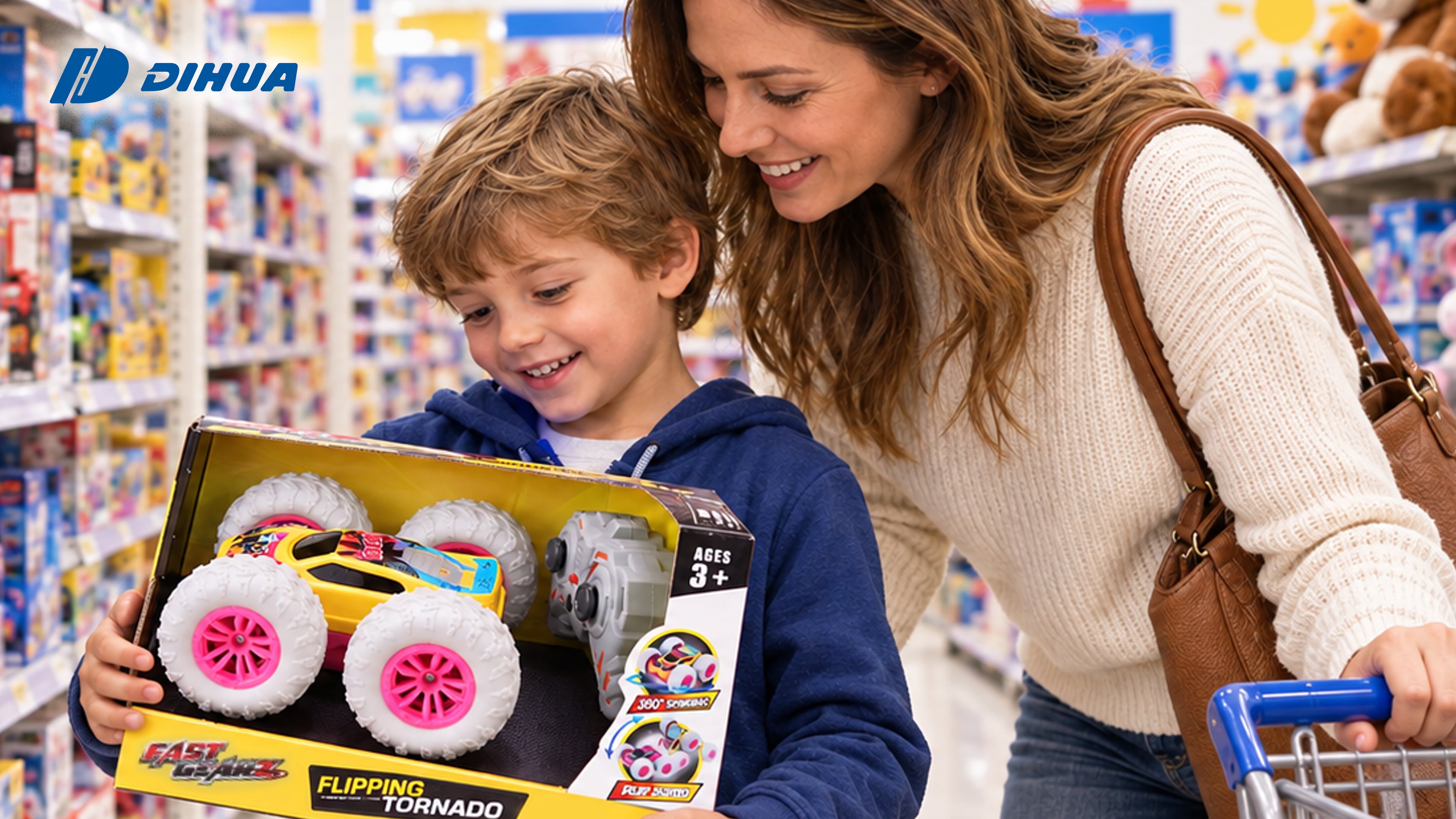
Whether an RC stunt car is suitable for supermarket shelves depends primarily on its core play features, product reliability, packaging visibility, target price band, and after-sales risk, rather than the number of features it offers.
Different stunt car types require different product selection criteria:
· Double-Sided Flip Cars: Focus on flip success rate and whether the car can continue moving forward, backward, and turning after flipping.
· Spin or Twist Cars: Evaluate the drive mechanism, movement stability, and performance across different surfaces such as hard floors and carpets.
· Drift RC Cars: Focus on drift wheel durability, control difficulty, required play space, and performance on hard surfaces.
· Gesture-Controlled or Dual-Mode Products: Verify recognition accuracy, remote control pairing, and suitability for the target age group.
The actions and usage scenarios shown on the packaging should match the actual product performance to avoid returns or customer complaints caused by unclear feature claims.
Flipping, spinning, and collisions place additional stress on the tires, axles, gears, chassis, body connection points, and battery compartment.
Buyers should verify the stability of key components, confirm that the 2.4GHz remote control pairs reliably and supports multiple units operating at the same time, and check the battery type, whether batteries are included, charging method, and runtime.
Packaging should use dynamic visuals to highlight core features such as flipping, drifting, or spinning, while clearly presenting the applicable age, control method, battery information, contents, and usage scenarios.
Buyers should also check packaging dimensions, visible product area, display format, case pack, and ease of in-store replenishment.
The packaging should both differentiate the product and fit the target shelf space and price band.
Within the same price band, buyers should prioritize comparisons of core stunt performance, surface compatibility, control experience, packaging visibility, landed cost, and after-sales risk. Products with unstable core functions, packaging claims that do not match actual performance, incomplete product documentation, or inefficient packaging should not proceed to formal sample testing.
Only when product performance, shelf presentation, and commercial requirements are aligned does an RC stunt car have the shelf value to be included in a supermarket assortment.
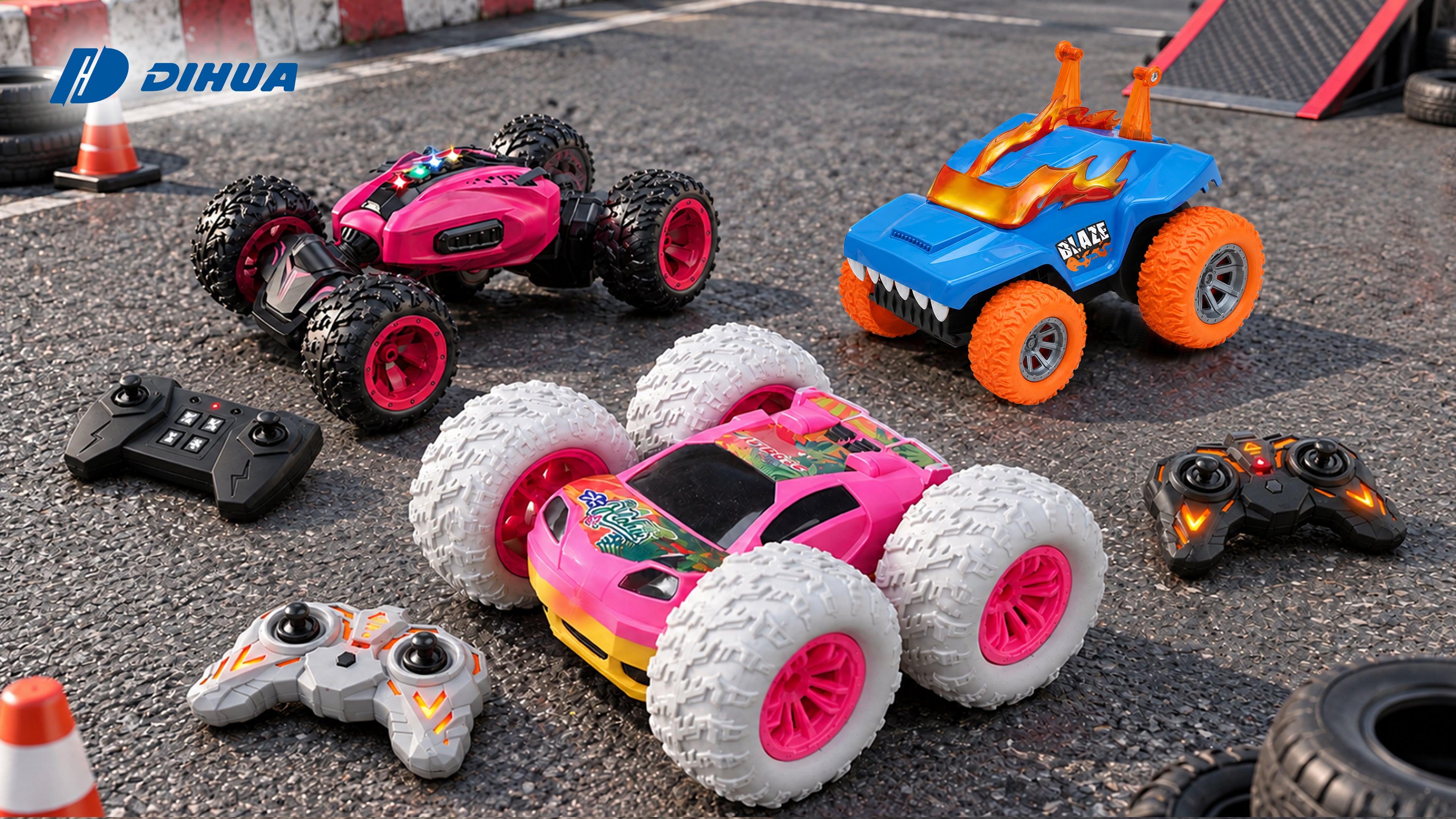
Sample testing should be conducted under consistent conditions to verify core play features, usage suitability, and product stability, providing a basis for ranking candidate SKUs.
Different stunt car types should have specific testing priorities:
· Double-Sided Flip Cars: Flip success rate and continued driving after flipping;
· Spin or Twist Cars: In-place movements, steering, and surface compatibility;
· Drift RC Cars: Performance on hard surfaces, drift wheel durability, and control difficulty;
· Gesture-Controlled or Dual-Mode Products: Recognition, pairing, response, and mode switching;
· Wall-Climbing Cars: Applicable wall surfaces, adhesion stability, and risk of detachment.
Test the products at minimum on indoor hard floors, low-pile carpets, and the target outdoor surface. Record startup, steering, stunt performance, stalling, and speed changes. For 2.4GHz products, also conduct multi-unit simultaneous operation tests and verify pairing, response, charging, runtime, and low-battery performance.
After repeated flipping, collisions, and continuous operation under reasonable test conditions, inspect the tires, axles, gears, body, battery compartment, and charging port for looseness, breakage, or functional issues. Also compare the test results with the approved sample, packaging claims, and instruction manual to ensure consistency.
Consider scoring candidates across core stunt performance, surface compatibility, remote control and power performance, ease of operation, packaging efficiency, landed cost, after-sales risk, MOQ, and lead time.
The following may be used as elimination criteria: unstable core functions, inconsistencies between the sample and packaging claims, unclear information on key accessories or batteries, packaging that does not fit the target shelf space, or the supplier’s inability to confirm the approved sample and product version.

Once a sample is approved, buyers should confirm the product, packaging, commercial, and compliance details to avoid version discrepancies after the order is placed.
Before placing the order, confirm the product size, color, material, core functions, control method, battery configuration, packaging, and instruction manual version. Any changes to the body structure, electronic components, tires, functions, packaging, or color should be reconfirmed and properly documented.
Pricing, MOQ, case pack, packaging dimensions, lead time, payment terms, and replenishment cycle should be clearly stated in the order documents. For supermarket channels, buyers should also confirm peak-season production capacity and reorder responsiveness in advance to avoid situations where the initial order is delivered on time but replenishment becomes difficult during promotions or peak season.
Based on the target market and product design, confirm toy safety, electromagnetic compatibility, battery, labeling, age warning, and packaging requirements.
For the EU market, buyers should also check the EU Responsible Person information required under GPSR, as well as relevant EPR labeling and registration requirements for packaging and batteries. For the US market, buyers should also confirm requirements such as the CPSC General Certificate of Conformity (CPC) and ASTM F963. Specific testing requirements and regulatory versions should be based on the current requirements of the target market. Buyers should also assess compliance costs and documentation lead times during the quotation and ordering stages to avoid additional documentation or packaging revisions during mass production.
The key to supplier evaluation is not whether a supplier can produce a working sample, but whether it can consistently reproduce the approved sample standard in mass production.
Buyers should understand how the supplier controls the motor, gears, wheel assembly, body structure, and assembly processes, particularly whether clear production controls are in place for core functions such as double-sided flipping, drifting, and spinning.
Motors, tires, gears, batteries, charging cables, remote controls, and packaging materials can all affect the final product. When different versions are used for different markets or production batches, the supplier should have clear document management and shipment verification procedures.
Supermarket products may require additional orders based on sales performance. Suppliers should have stable production scheduling, delivery coordination, and reorder response capabilities. Specific lead times and replenishment terms should be confirmed for each project.
Buyers should understand how the supplier handles issues such as remote control failures, wheel assembly damage, packaging errors, and batch inconsistencies, including root-cause analysis, corrective actions, re-inspection, and batch traceability.
With over 25 years of experience in toy export and sourcing, Dihua provides support across product sourcing, product development, packaging management, quality control, testing documentation coordination, and export services.
Dihua maintains a continuously updated portfolio of 1 million+ active SKUs across RC, building blocks, wooden toys, STEAM, outdoor toys, and other categories. Based on the target market, price band, target age, and channel positioning, Dihua can help buyers identify and organize suitable RC stunt car candidates.
Dihua has dedicated product development and design teams with capabilities in 3D modeling, rendering, sample development, and structural communication. These capabilities support early-stage discussions on RC stunt car appearance, functions, and customization requirements.
Dihua provides packaging design, artwork management, and color proofing capabilities, and can coordinate color boxes, instruction manuals, warning information, and market-specific versions to maintain consistency across the product, packaging, and listing materials.
Dihua has QC and testing support systems to assist with sample verification, production quality follow-up, pre-shipment inspection, and coordination of third-party testing documentation according to project requirements. Dihua also supports follow-up on quality feedback and corrective actions.
If you are sourcing RC stunt cars for supermarket channels, you can provide basic information such as the target market, channel positioning, price band, purchase volume, and launch schedule. Based on these requirements, Dihua can help identify suitable candidate products, define key sample testing criteria, and prepare relevant sourcing documentation to help evaluate shelf performance, after-sales risk, and ongoing replenishment potential.
Dihua welcomes you to visit our booth at the third phase of the Canton Fair from October 31 to November 4, 2026, at 17.1B34-35 and C10-11, to discuss potential cooperation in person.
Q1: What should supermarkets compare first when sourcing RC stunt cars?
First, classify the products by type, such as double-sided flip, spin or twist, drift, and gesture-controlled or dual-mode cars. Then set evaluation criteria based on the SKU role, target price band, intended surface, and display format.
Q2: How should buyers choose between double-sided flip cars and drift RC cars?
Double-sided flip cars offer more straightforward stunt play and are suitable for products focused on ease of operation and entry-level price points. Drift RC cars rely more on smooth hard surfaces, sufficient play space, and control experience, making them more suitable for higher target age groups or SKUs with stronger packaging demonstration appeal.
Q3: Which tests should not be skipped when evaluating RC stunt car samples?
At minimum, test core stunt performance, surface compatibility, simultaneous operation of multiple 2.4GHz units, runtime and charging performance, and structural condition after repeated flipping or collisions. Test results should also be checked against the approved sample, packaging, and instruction manual.
Q4: What compliance requirements apply to RC stunt cars sold in supermarkets?
For the US market, requirements include CPSC/CPC and ASTM F963. For the EU market, requirements include CE, EN 71, RED for radio equipment, and UN 38.3 for batteries. For 2.4GHz products, FCC requirements apply in the US and RED requirements apply in the EU. Specific requirements should be confirmed based on the current regulations in the target market, with compliance costs assessed during the quotation and ordering stages.
Q5: How should buyers test interference when multiple 2.4GHz products operate in the same space?
Set up at least three units of the same frequency system in the same space and test them simultaneously. Check for pairing interference, response delays, or loss of control. This test should be included at the sample evaluation stage.
Q6: How should an all-terrain claim be defined for RC stunt cars?
The packaging and instruction manual should clearly specify the tested surfaces, such as indoor hard floors, low-pile carpets, and target outdoor surfaces, and identify surfaces that are not suitable for use. This helps avoid returns or customer complaints caused by unclear performance claims.
 Hot News
Dihua specializes in sourcing,productdevelopment,production tracking,sales,and service.
Headquarters:
No.1 Leshan Road, Longhu District, Shantou, Guangdong, China
Hong Kong office:
Unit 2401,24/F, Million Fortune Industrial Centre, No.34-36 ChaiWan Kok Street, Tsuen Wan, NT, Hong Kong
Copyright © Shantou Dihua Trading Co.,Ltd. All Rights Reserved Privacy Policy

 EN
EN
 FR
FR
 JA
JA
 RU
RU
 ES
ES